Join mailing list by writing your e-mail and hit return on your keyboard:
overgaard.dk contact HOME


The Worlds (possibly) Longest Camera Review - "What If..?"
Bookmark and Share Clip to Evernote
leica.overgaard.dk    
Leica M9 Digital Rangefinder Camera - The What if Page


Photokina 2012 Updates

Index of pages covering Leica M9, Leica M9-P, Leica M-E, Leica M Monochrom and Leica M Type 240:

Leica M9 1 2 3 4 5 6 7 8 9 10 11 12 13 14 15 16 17 18   M9-P    
Leica Monochrom 20 21 22                                      
Leica M 240: 30         35 36                         What if? Links  

By: Thorsten Overgaard


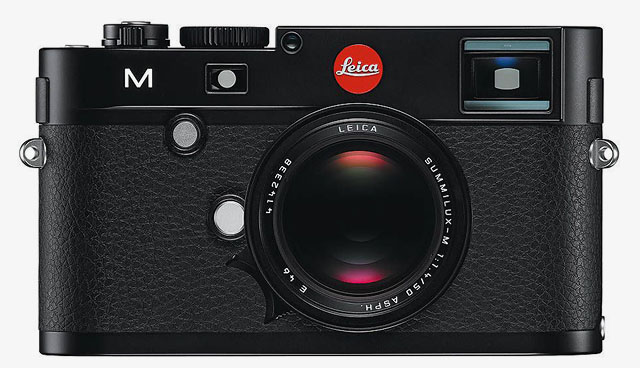
Leica M (aka Leica M10 or M240 or Type 240) in black paint. Also available in silver/chrome. The vindow that illuminates the frame lines is gone as the frame lines are now lit by LED. No frame-selector as the LED framelines are not three sets but one for the specific lens. Focus multi-button on front. The rest is as it used to be.

Overgaard Advanced Workshop in London


Expected release date for the Leica M (Leica M10 / Type 240)

At Photokina the release date was to be early 2013, which with some knowledge of Leica Camera AG history and common sense translate into March 2013 or April 2013. B&H Photo in New York changed their delivery date till April 30 in the beginning of February 2013 which for some translated into that the Leica M was delayed.

When the Leica ME was released at Photokina 2012 it was available in fairly large quanities from that day. So Leica Camera AG actually do plan their releases. The Leica M Monochrom started delivery in August 2012 as promised and is produced in batches as most Leica cameras and lenses. So I would expect the Leica M Type 240 to likewise be produced in batches, meaning the delivery will go up and down. Just as it is the case with lenses that are also produced in batches.


Leica M Type 240 started delivery on March 1, 2013

Leica Camera AG delivers as promised, but perhaps in smaller quality than planned. Black and - a few - chrome Leica M cameras were picked up at dealers around the world on March 1, and a few more are shipped in the first week of March. I will be getting mine as well (reserved and paid for last year via Leica Shop Vienna). Also Steve Huff got his own camera delivered on March 2 and will be writing about it the next days and weeks.

The digital viewfinder EVF 2 can be hard to find but is around (at Meister Camera in Hamburg amongst others) or one can go with the Olympus that is essentially the same. The R to M adapter may be found on eBay for a good price (€30-50 is the range, so if listed higher, do a new search), and will work (till the real thing comes about).
The microphone is not yet available, so one may go for the Olympus SEMA-1 that is essentially the same. Spare batteries are yet to be delivered, some have said end of March.


Leica M Type 240 User Group on Facebook

You may also want to join the Leica M Type 240 User Group on Facebook


Leica M Type 240 Firmware update March 1, 2013

The first firmware update was available on March 1, 2013 an offered improved wide angle profiles.


Reviews and samples

Reviews and samples from the Leica M Type 240 *final production model* from March 2:
Steve Huff: "Leica M Video Overview – Very 1st look, Menu System, Shutter sound and more"
Tulip Frenzy by John Buckley: "Initial Thoughts On The Leica M When Used In Classic RF Mode"
Tulip Frenzy by John Buckley: "Second-Day Thoughts On The New Leica M (March 3, 2013)"

Sample photos from the Leica M prototype
The Leica M has been beta-tested since July 2012 and I saw the first unofficial samples of real-life high ISO photos in October 2012 and the first test images were released in February 2013 by beta-tester Jono Slack via the Leica User Forum and Chris Tribble via the Leica user Forum Blog.

A few pre-reviews of the Leica M Type 240 prototype as of February 22, 2012:
Jono Slack's "Testing the Leica M Type 240" (free)
Rean Reid's studio comparison of Leica M prototype, Leica M9 and Leica Monochrom (paid website)
Ming Thein's sample photos and viewpoint on the Leica M Type 240 prototype (free)
An couple of articles in the February/March 1/2013 issue of LFI (paid subscription magazine).


Leica M release at Photokina 2012
The Photokina 2012 pre-opening event at Leica Camera AG, September 17, 2012. Leica M9 with Leica 50mm Noctilux-M f/1.0


What to do in the waiting time
I would spend the waiting time wisely. What will happen when the Leica M comes out and the many people in doubt realize that this is actually a better and faster camera than the Leica M9. There may be many on the waiting list, but even more are undecided. Hence - that is my prediction - the demand will explode in May, June and July 2013.

For the record, the demand for Leica 50mm Noctilux-M ASPH f/0.95 was 8 times higher when released than Laica Camera AG had calculated in their wildest dreams (which explains the waiting time for that lens).

The new Leica 50mm APO-Summicron-M ASPH f/2.0 that has a price tag that should make most people conservative in their want for that lens is on a loooong waiting list even before it has become available (and that is the lens that Leica Camera AG talked about in 2006 and said they would never produce because nobody would pay that much for a lens).

With the new "Apple-inspired model system" of Leica M, Leica MM, Leica ME the market for Leica cameras will expand further. And all those new cameras will want one or more lenses.

So I would spend the waiting time figuring out which lenses the market would want (that I would also want), and then get those before the rush. 50mm Noctilux, 35mm Summilux, 75mm and 90mm Summicron ... the usual lenses that has been on 12-24 month waiting lists.

Oh yes ... and one more thing. Get microphones, batteries, EVF2 and all that bits and parts while available.


<---- See the updated article about the Leica M Monochrom here (that was released in Berlin on May 10, 2012)

Thorsten Overgaard Workshops


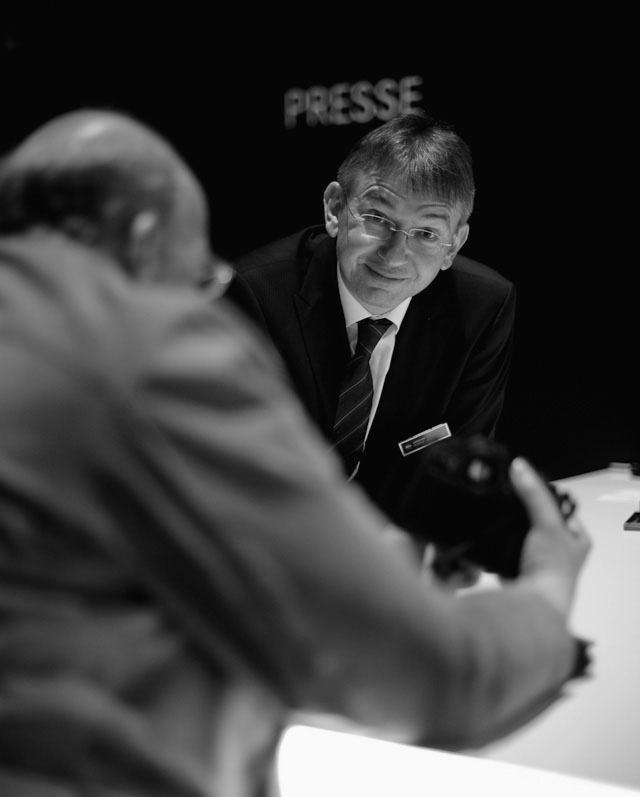
New: Interview with Stefan Daniel on the floor of his office

Enjoy this unique video about the new Leica M ( aka Leica M10 or Leica M240 ), Leica ME and product manager Stefan Daniel who was born in the Leica factory ... or was he? All this and much more is answered in this video we made on the floor of Stefan Daniels office at Photokina 2012. Enjoy!


Leica M (aka Leica M10)
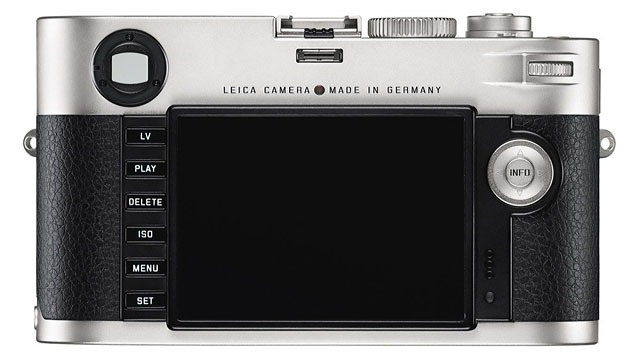
The backside of the chrome/silver version of the new Leica M (M240) that will be available in early 2013 in this and black paint. Note the scroll wheel by the right thumb that will serve to scroll menues, amongst other things. And the connector below the flash shoe that is ised for the EVF (digital viewfinder). The top left button by the display is Live View (LV), and there is three lamps for battery indicator to the right of the screen. And .. the screen is larger and better than the one known from Leica M9.


Which Leica(s) should I get?

The uneasy answer of course is to get them all. Then again, one should make it as simple as possible as that is the whole philosophy of Leica. One good tool to achieve the optimum.

Since the Monochrom came out I have traveleed with one Monochrom and two Leica M9 cameras. And with the Leica M 240 things just got worse.

My advice is that the camera that makes you feel great and make you go out to shoot is the right one. Don't look so much at numbers, prices and samples. Feel it and follow that instinct. And when it changes, change with it.

When the Leica M9-P came out, it wasn't a change in technology, only cosmetics. But the camera did make you want to get one, to get that feeling of a brand new Leica again. And if that works, get it.

Likewise, with the Leica M Monochrom, despite that many can't tell the difference between the M9 and the Leica M Monochrom prints in black and white, if it gives you the feeling of new love, that is enought. Get it.

And as the field broadens with the new Leica M Type 240, then what to get and what to bring? I must say that my months with the Monochrome have gotten me used to the high ISO. So I wonder if I will use the Leica M9 much after having gotten used to the Leica M Type 240. And I wonder if I will move on to just using the Leica M Type 240 for color and black and white.


The which is what Leica overview

For comparison and to get the thoughts straight, here is an overview.

However, it is clear that Leica Camera AG now offer a range of cameras that will suit different needs. As for example the Leica M Monochrom that may or may not be suitable for professional photographers whoes clients require color photographs. But it is a hell of a tool to play with, and if you have realized you prefer black & white photography, you will have fun with the unknown possibilities of the Leica M Monochrom. As with Jimi Hendrix, he didn't invent the guitar, but he did invent some funky ways to use it. Such is it with the Leica M Monochrom. So there you go, one type of Leica user, and here is a range of Leica cameras for different needs:

Model M8 M8.2 M9 M9-P M-E
Type 220
M
Type 240
MM
S2 S
Type 006
Nickname           "M10" "Henri"   "S3"
Start 2006 2008 09/2009 06/2011 09/2012 02/2013 08/2012 2010 2012
End 2009 2009 2012 - - - - 2012 -
MP 10 10 18 18 18 24 18* 37.5  
Sensor CCD CCD CCD CCD CCD CMOS CCD B&W    
Format 18x27 18x27 24x36 24x36 24x36 24x36 24x36 MF MF
AA filter No No No No No No No No No
Video           Yes      
Adapters           R   Hasselblad
Shutterless           Yes      
Mirrorles Yes Yes Yes Yes Yes Yes Yes No No
GPS           Extra     Yes
EVF No No No No No Extra No No  
Framelines           LED   No No
DNG DNG DNG DNG DNG DNG DNG DNG DNG DNG
JPG JPG JPG JPG JPG JPG JPG JPG JPG JPG
Price US$ 4,800 5,400 7,000 8,000 5,450 7,000 8,000 23,000  
Price Pounds 2,990   4,950 5,395 3,900 5,100 6,120 17,100 16,000
Price Euro     5,000 6,000     6,800 18,600  
Batteri pack No No No No No Extra No Extra Extra
Processor           Maestro   Maestro Maestro
Weight     580g 600g 580g 680g      
Frame selector     Yes Yes No No Yes No No
USB port     Yes Yes No Extra      
Weathre sealed No No No No No Yes No No Yes


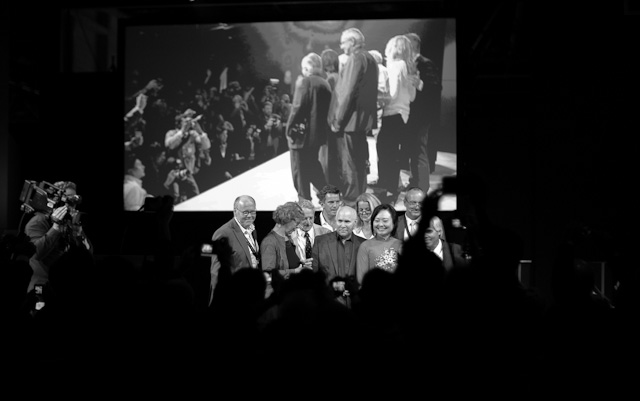
The stage packed with iconic figures of Leica photography history during the first part of the event. September 17, 2012. Leica M9 with Leica 50mm Noctilux-M f/1.0


My first impression of the new Leica M

By Thorsten Overgaard, September 17, 2012

The Leica M on Photokina is still a prototype and I might hope for slightly different buttons by the screen. But after a little use, it's like the Leica M9 with a few changes.
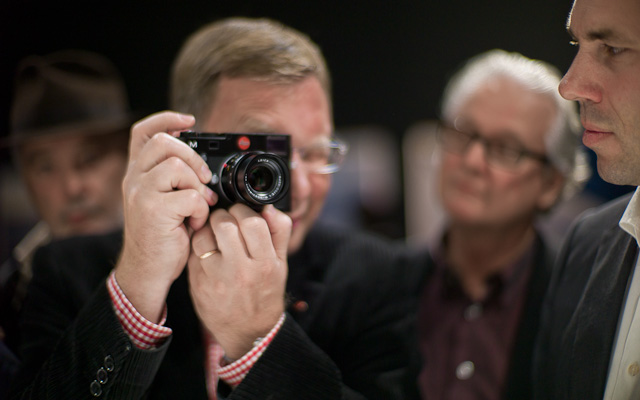
Some mentioned a higher weight of the camera, but I don't know. It had the new Leica 50mm APO-Summicron-M ASPH f/2.0 mounted which is a slightly heavier lens, and it also has a larger battery. Not much difference to me.


Taking the Leica M for a swing on September 17, 2012. Leica M9 with Leica 50mm Noctilux-M f/1.0

Shutter-less (and mirror-less)
What I noticed was that when the camera is turned on, you get the sound of the shutter going up. And it only goes down when you unmount the lens to change lens and when you turn off the camera. But the camera is not silent. I expect the shutter has to 'clear' the sensor still, as it was the case with the Leica M9.

Sara T'Rula and Birgit Krippner
Sara T'Rula and Birgit Krippner at the Leica Camera AG pre-Photokina event in Cologne, September 17, 2012. Leica M9 with Leica 50mm Noctilux-M f/1.0.

Improved buffer
I shot 11 images in a row, DNG 24MP with 3 frames per second, and then had to wait 3-4 seconds before I could fire another 5 images. So whatever the exact time is, the buffer is bigger and faster than the Leica M9 (as a comparison the Leica S have twice the size buffer of the Leica S2 for the same reason).
LED lit framelines
The framelines are very bright due to the new LED lit framelines. I like it instantly. No question. Choice between red and white lines, adjust to the amount of light around you so they are always clearly visible.
The framelines are set by the lens and does not require 6-bit coding; same system as it always was before 6-bit came about. No manual selection of frame lines and you only see the actual frame lines for the actual lens, not two pairs.

Larger battery
The battery in the Leica M is approx twice the size (thickness) of the Leica M9 battery. 7.2v, 1.8 A/hr.

Handgrip in two editions
A plain handgrip can be attached to the camera bottom and offers the possibility to screw on a rubber finger lock (that comes in three sizes with the camera).
A studio handgrip with GPS comes that connects up into the camera body via one large (the size of an iPhone 5 connector) and has four connectiors on the handgrip for USB, power and two types of studio sync. This studio handgrip also comes with the three rubber finger locks.
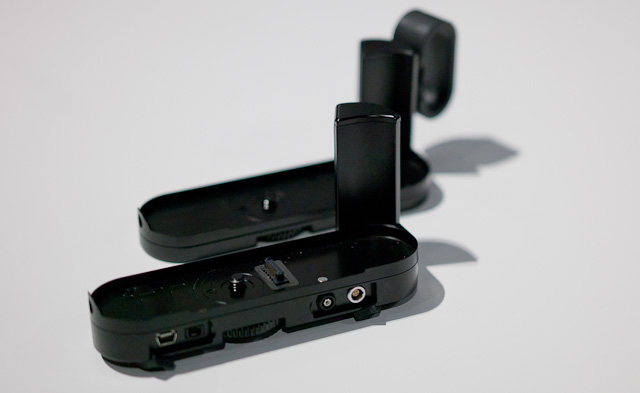
The two types of handgrip for the Leica M
The two types of handgrip for the Leica M. Photo by Thorsten Overgaard.

Weather sealing
If it has it or not, I don't know. But the bottom plate has been redesigned with a thin rubber sealing inside that protects the electronic parts inside the camera from water. The buttom of the camera is closed completely apart from where the SD-card and the battery goes in (and it is those parts that are sealed by the bottom plate's new additional rubber sealing). As you may recall, the leica M9 is assembled with plastic button to the body. The Leica M seem to be metal all the way through; no assembling.

The shutter release button and shutter time wheel on top of the camera looks like the Leica M9. They never said it was weather sealed, but mine have survived heavy rain despite the lack of promise that it could resist water.

New top button for recording of video
As you can see on the picture below, the Leica M has a new chrome button next to the shutter release button on top, this is the on/off for video recording.

Live view
A new dedicated button on the back is LV which will turn on live view, meaning that the screen is on all the time (or the EVF on top of the camera if that is used). Not much interst to me, if I want live view I would use the EVF. More discrete, easier to hold the camera still.

Light metering
The light metering in the menu offer Classic and Advanced. The grey and white stripes on the shutter curtain as well as the three small eyes inside the camera for metering the reflections from the stripes are the same.
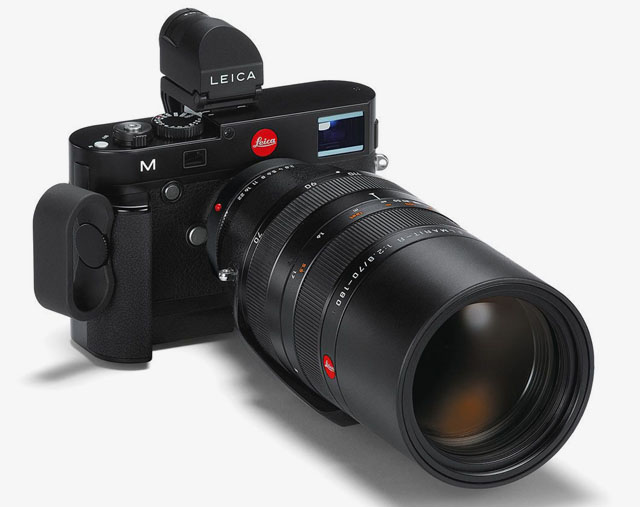
Leica M with battery pack attached, Leica R to M lens adapter
Leica M with studio handgrip attached, Leica R to M lens adapter (and Leica 70-180mm/2.8 lens), as well as the EVF (Electronic ViewFinder). Not bad, actually ...

The long awaited R solution
The EVF (Electronic ViewFinder) you can add on top of the Leica M (that I constant want to call the Leica M10) means that we won't need the classic and very well-made Leica viewfinders for 24mm, 21mm and 18mm wide lenses. It's all going to be in the EVF. The EVF is the same as the one for the Leica X2 and has a design that reminds of the Visioflex. Nice.

But even more interstingly the EVF adds the possibility to use longer lenses than the Leica 135mm (and you will see the full frame of any lens in the full screen of the EVF). Who know if Leica Camera AG's lens designer Peter Karbe is working on a new 180mm f/2.0 lens, not to mention new lenses that will cover the traditional viewfinder, such as 75mm f/1.2 ...?
But moreover, with the new Leica R to Leica M adaptor you can now use the Leica R lenses on the Leica M. Hence, if you still have a Leica 400mm Telyt-R f/6.8 (as I do) you can now use it on the Leiac M. Not to mention the sexy Leica 80mm Summilux-R f/1.4.

No AF lenses in view
Nothing indicates that Leica are planning Leica M Auto Focus lenses. The lens mount on the Leica M doesn't reveal any new contacts for such.
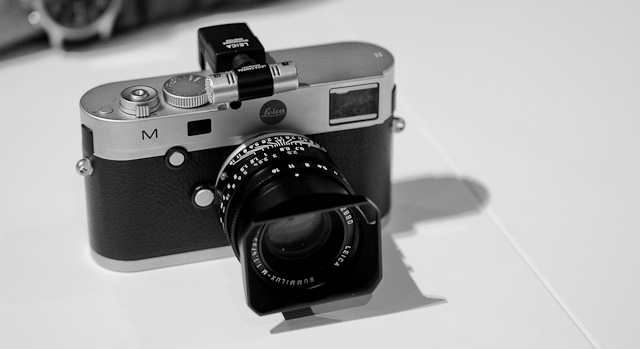

Microphone
- The Leica M has a built-in mono microphone under the top plate (under the four small holes), and you can also add a stereo microphone in the flash shoe.

ISO
The ISO of the Leica M should be 6400 ISO, perhaps more. The prototype at Photokina only had 500 ISO in the menu so this is something Leica Camera AG is still working on. My guess is that 3200 ISO will be the usable ISO.

Image quality
This is the big question. Will the image quality of the CMOS sensor be as good or even better than the existing sensor in the Leica M9. I haven't seen any samples yet, but according to Dr. Kaufmann they have improved the CMOS sensor beyond what other cameras have.

New CMOS sensor
What we do know about the new CMOS sensor in the Leica M is that it has a thinner color filter and a special microlens design (each pixel in the sensor is covered by a lens, and the lenses in the Leica M sensor are designed with an 'adapted radius' that is illustrated by Leica Camera AG in their brochure so that is shows ow incoming light rays are not flowing from one lens to the neighbour pixel sensor; in short, it should make the image sharper and more crisp and detailed).
The CMOS sensor has been developed, according to Leica Camera AG, to have the qualities of the CCD sensor, but more energy-effecient and of course with the higher ISO possibilities of CMOS, as well as LiveWiew that comes handy for focus aid and video.

Sample photos
I haven't seen any yet, and I don't expect to see any real sample photos till end of the year just before the camera goes into production. And then again, not till we get the Adobe RAW camera profile will we know.
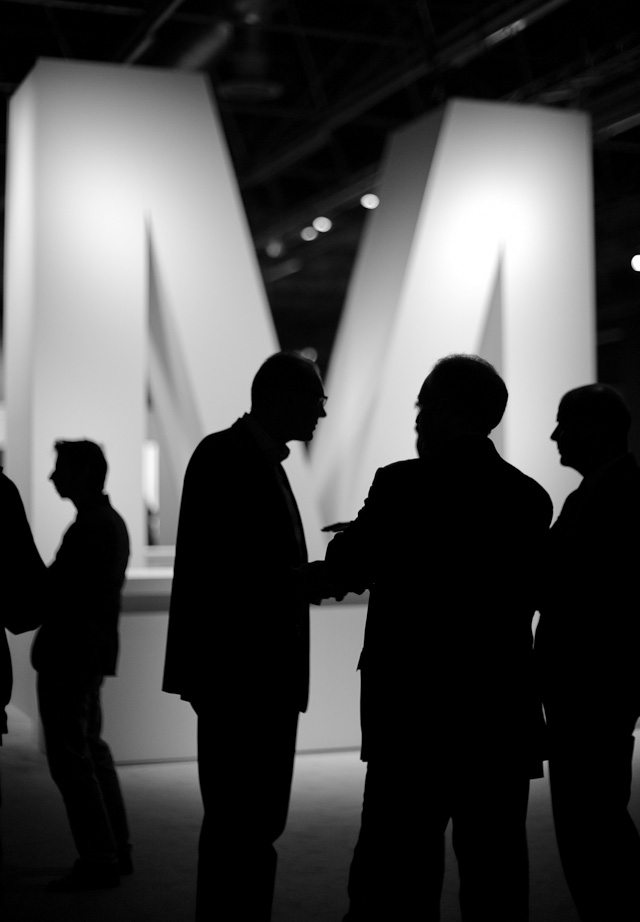


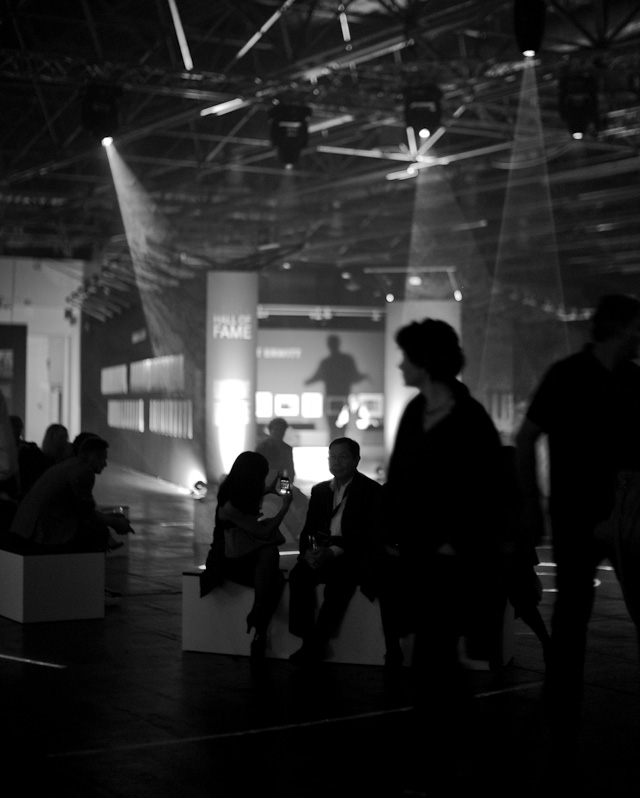
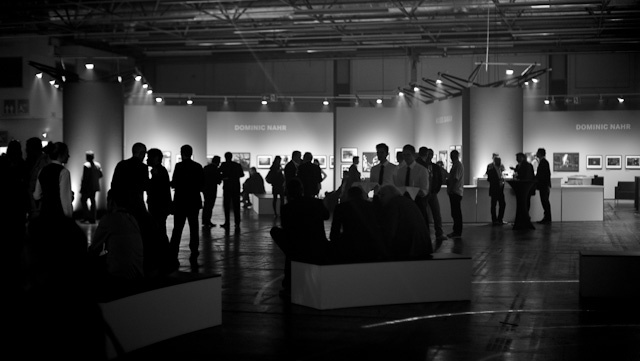
The Leica Camera AG at Photokina 2012 also features a large exhibition in Hall 1 of 20 historic Leica photographers' work. September 17, 2012. Leica M9 with Leica 50mm Noctilux-M f/1.0
Video interview coming up
I should get a video interview made with Stefan Daniel on Wednesday and will make it available here.


Huge interest for the new Leica M on September 18 from early morning at Photokina. Leica M9 with Leica 50mm APO-Summicron-M ASPH f/2.0 (final production model). At the end of the day the Leica Camera AG representatives who had been demonstrating Leica M all day said 99% were very happy with it.


Testing the Leca M with R lenses at Photokina, September 18, 2012


My first impression of the new Leica M-E

By Thorsten Overgaard, September 17, 2012

The Leica ME is essentialy the Leica M9 in a different color. The E in M-E stands for Entry, and the price seem to reflect this. We are basically back at Leica M8.2 price level pricewise.

Very good, and as Stefan Daniel said to me, "The Leica M9 is such a good camera it would be a pity to stop producting it."

Only the color ... it has to come in other colors than this in my opinion. Or perhaps one should ask for customized from the very first day. As always, I'm sure Leica can produce it in the color you like (in case you didn't read about the Leica M Monochrom, this has been made in silver for clients already).

Then again, this opens up for Leica ME in silver and black, as well as "ME-P" without the red dot and so on. And as the Leica M-E is essentially the Leica M9, rebranded as the new entry-level Leica ME, the second-hand prices of Leica M9 and Leica M9-P will likely stay in a high level. Especially because everybody will have their own opinion about which colors are the nicest.


The Leica M-E, available now. Photokina, September 17, 2012. Leica M9 with Leica 50mm Noctilux-M f/1.0


Leica ME, the Leica M9.2 or simply just the Leica M9 in new colors.


Leica S demonstration at the Photokina by Stephan Schulz who has been the midwife of the Leica S system since the S2 prototype


Other news

As some may have heard, the Leica X2 will come in 1,500 pcs limited edition in Paul Smith design. He already designs my black t-shirts and my suit, but if I were to get a Leica X2 I would go for the many new funky colors you can get now. Body in one color, leathe in another, matching strap and all. It's very sexy I tell you.

The Leica S2 has gotten an upgrade and has gone slightly down in price. And is now just "The Leica S". I haven't been around to play with it and I'm not much of a Leica S user: The camera is so perfect I find it boring, but with the Leica S the Leica S2 has moved from a production prototype to a real camera. That's my feeling about it. I will be doing a video presentation of it in one of the next days.


The Paul Smith designed Leica X2, available as 1,500 pcs limited edition.


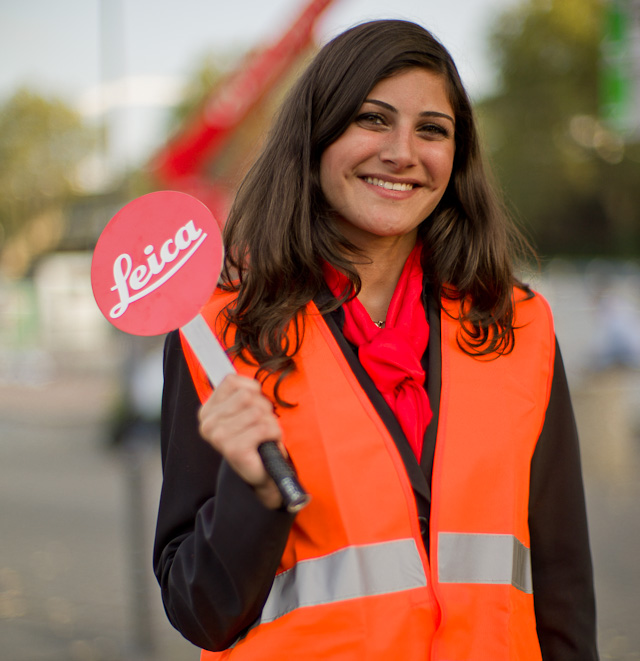
Leica traffic patrol guiding guests to the event via a back entrance and via large freight elevators ...

For impressions from the evening, see Herbert Piel's updated blog with lots of photos here.


Good night. More to come over the next few days ...


(And by the way, just checked: 121.959 shutter actuations on my Leica M9 since September 2009: An average of 111 photos per day).


What if..?

By Thorsten Overgaard, April 2012
(Latest update August 2012)

For many years Leica Camera had their main contact with their users via the Customer Service department, meaning when something had gone wrong. For some years Leica Camera AG have been practicing a new strategy of having contact with their users long before they start thinking of new products.


Also, as part of a new way of doing things, new products are released without they are being talked about before they are actually released

At the actual release parties a select group of users of the Leica cameras - along with journalists and bloggers - are invited to the product releases, as in New York on September 9, 2009 when the Leica M9 surprisingly was released, in June 2011 in Paris when the Leica M9-P was released. And again in Berlin on May 10, 2012 when the ... is being released.

This all allow us to hope that what we have been hoping for as users of Leica cameras may in fact become reality. And also, the new strategy of not talking about it allow - or perhaps even encourage - us all to speculate.

But whereas we as users are concerned with our next camera, Leica Camera has a whole future of different product lines in view ... and that might make things a little more difficult to predict.


From technical oriented to photography oriented

Not too many years ago, less than 10 actually, Leica Camera AG spokespersons would speak in no uncertain terms about how film was superior and the digital age of photography was theater thunder in the horizon. In due time the world would rediscover the virtues of film cameras!

They said.

Since then, the development has moved fast forward and what had previously been considered impossible, became reality. The Leica S2 medium format camera was developed fresh from nothing to a 37.5 MP cameras the size of a Canon 5D and is a success in sales figures despite delays in parts of the system essential to the professional users they S2 was aimed at.
The Leica M9 full frame digital rangefinder camera with the feel of a Leica M4 or Leica M6, but with instant gratification in 18MP digital files, was introduced circa 30 months ago and has helped raise Leica Camera AG sales figures and the markets confidence in the brand.

In a way, it is now again as it used to be in the old days: It was Leica that invented the 35mm film format 90 years ago which the majority of camera systems are still relying on. It was Leica that defined a roll of film to 36 frames (as this was how far out Oskar Barnack could stretch his arms). It was Leica that invented the auto focus since 1960 (and also some unnamed Leica executive who said nobody would want it why they sold the rights), and it was Leica that invented the hot shoe for flash. And the list goes on...


Leica M9 with Leica 50mm Summicron-M f/2.0. Photo: Thorsten Overgaard, Nepal, March 2012


With a touch of nostalgia

As the company heads into the future technologies with Dr. Kaufmann as the person who presumably drives the company (and the engineers to the limit of what they thought was possible), the company also grow both more trendy, modern and streamlined.

The small renovation of the headquarter in Solms gives a hint, and the Leica Stores that seem to open every month in new hot spots around the globe is just a hint of what the drawings of the new headquarter in Wetzlar (a few kilometers from the current factory in Solms) reveal about a modern and strong Leica Camera AG.


Leica M9 with Leica 35mm Summilux-M ASPH f/1.4. Photo: Thorsten Overgaard, Nepal, March 2012.

But as this all moves forward, Leica Camera AG is also reconnecting with the past; the reason why Leica made cameras and the reason why some of the worlds best photographers used them.

The corporation with Magnum Photography announced in June last year to name one, and if one visit the Leica dungeons one will find the walls not decorated with whiteboards and color prints made from Microsoft Excel, but with real classic photography prints from the great masters.

  Henri Cartier Bresson by Jane Brown (1957)
  Henri Cartier Bresson by Jane Bown (1957)

When Leica mean business, they mean photography. Which is also why the Leica Galleries will be increasing in size, quality and importance to the brand.

But don't take the nostalgia as a sign that Leica hope to return to the past with film. Take it as a sign that they try to understand the photographers even better and fulfill the actual needs for cameras as a tool of the artist. And then ... make a note that Leica Camera may re-invent new technology which repeat the old, but in ways so the actual need of photographers is fulfilled by technical genius.

What if ... Leica re-invented a modern camera to fit the needs of an old master like Henri Cartier Bresson ..?

(Leica M Monochrom)


Let's not forget - it all starts with the glass

Apart from what Leica has of technical and engineering capacity (they also felt the need to invent their own Central Shutter [CS] system for the Leica S lenses as the industry standard every other medium format camera producer rely on wasn't good enough for Leica) they have preserved optical knowledge from at least 100 years of brilliant research and application of optical magic, perhaps even 163 years of knowledge from back in 1849 when Optical Institute was established by Carl Kellner in Wetzlar and started building a reputation of the best optics in the world.

This preserved experience and knowledge is unique in an industry where the best heads working at leading brands such as Nikon, Canon, Zeiss and Hasselblad have studied the industry standard optical text-book written by Prof. Max Berek, the first designer at Leica creating optics for cameras, followed in a straight line by brilliant people, first Walter Mandler and then the current Peter Karbe.

Where the other optical designers has the text book, Leica optics department have the samples, the prototypes, the notebooks. Also, Leica Camera is said to have about 2,000 glass patents; types of glass together with knowledge about their specific qualities (the glass in front of the Leica M9 came from one of these patented glass types).


Peter Karbe with the a "Optics Konstrucktionsbüche" of Prof. Max Berek from 1930.
Peter Karbe with one of the many notebooks, "Optische Konstruktionsbücher" of Prof. Max Berek from 1930. Photo: Thorsten Overgaard.


Leica Camera rely on the past knowledge and rethink, reinvent and invent new ways to control light. Peter Karbe have renewed and redefined the 50mm lens range with the 50mm Summilux-M ASPH f/1.4 and the 50mm Noctilux-M ASPH f/0.95 and latest added two outstanding lenses, the 21mm Super-Elmarit-M ASPH f/-M ASPH f/3.4 and 35mm Summilux-M ASPH f/1.4.


Leica M9 with Leica 35mm Summilux-M ASPH f/1.4. Photo: Thorsten Overgaard, Denmark, March 2012.


What if ... he has finalized his well known - let's not hesitate using as strong a word as - obsession of developing the mother of all 50mm lenses (the Leica 50mm APO-Summicron-M ASPH f/2.0).

And what if ... he if working on further new lenses in the widest wide angle range, more extreme 28mm and 35mm lenses, not to mention 75mm and 90mm.

When Peter Karbe and his team at Leica was asked to make a new 50mm Noctilux-M ASPH M f/1.0 they did not just an improved the design and add ASPH, they did a f/0.95 (worlds fastest 50mm lens), with floating element - without making the lens bigger! So if - or when - Peter Karbe takes on the 75mm and 90mm, then what?

What if ... he just doesn't find it that interesting doing just a new version but something radical..?


Leica M9 with 50mm Summicron-M f/2.0 (II). Photo: Thorsten Overgaard, Singapore, February 2012.


They all say they saw a red sign and knew their destiny ...

The remarkable about Leica is that they seem to employ a great number of very talented people, some pure geniuses, despite the fact the factory lie so far out in nowhere that even Germans fail to know the place.

When you visit the factory and speak to young and old employees, they all seem to claim to have been lying in their childhood bed where they could see the red Leica logo on top of the building in Wetzlar and then decided this red sign was their destiny!.


Leica M9 with Leica 35mm Summilux-M ASPH f/1.4. Photo: Thorsten Overgaard, March 2012


Factually it is unlikely that so many children's bedrooms have been located in a way so they could see the sign. A more plausible history is the unconfirmed but widely known (hence it must be true) that a spaceship landed more than 150 years ago in a field on it's way to an optical award show in another galaxy. With so many opticians stranded on planet Earth with little to do other than making prescription glasses, they tried to make the stay a little more entertaining by creating some more advanced optical constructions.

This is the only reasonable explanation for this phenomen out in nowhere, and it is likely that the name Kaufmann indicates that this was the family who owned the grocery store on the spaceship. How else would he have made the money to buy the factory?

And the first living specie in orbit ... Leika.

Not a coincidence.

I have already said too much, and I haven't even said that the new Leica Camera AG headquarter looks like a flying saucer. In fact, just like the new Apple headquarter. If these things are not headquarter but things that can fly, we're going to have a lonely time ahead.


Leica M9 with Leica 35mm Summilux-M ASPH f/1.4. Photo: Thorsten Overgaard, Denmark, March 2012.


Leica as a true luxury brand

Kaufmann who took over the majority of the stocks, in fact almost all of them, just a few years ago, like to present Leica as the worlds only luxury brand in cameras. And in the same breath he will state that people keep asking that Leica will lower the prices so more can buy - "but that will never happen," he promises.

Now the word luxury comes from Latin 'excess' and can be defined as "an inessential, desirable item that is expensive or difficult to obtain."

Luxury brands live an exotic life these days. If one visit a Louis Vuitton, Hermes, Porche or similar luxury store anywhere in the world, it's obvious that they have a very special position. And if one travel to Asia where the economic future definitely lies, they have not just one store but several stores in the same town.

As I see it, Leica belong to the royalty of luxury brands with Hermes, Goyard Louis Vuitton and Porsche. Chanel, YSL, Mont Blanc, S. G. Dupont, Apple and others are also luxury brands in the sense that it is well-made and branded goods at a high price. But the royalty of luxury brands are the ones that posess special knowlege and handcraft their products. Anyone with money can build a luxury brand, but having a brand with special knowledge accumulated over 100+ years and still based on that special knowledge ... very few has that.


Leica M9 with Leica 35mm Summicron-M ASPH f/2.0. Photo: Thorsten Overgaard, March 2012.


Leica fit right into this type of luxury brand, and when one visit a city, the Leica Store is usually found close to the Louis Vuitton, Hermes and Apple Store. In Singapore Louis Vuitton and Leica Store are next to each other. In Japan Hermes still own part of the Leica Japan, and the store manager at the Leica Ginza Store in Tokyo previously was with Hermes.

If one pay attention it is also obvious that Leica is expanding the most in the areas where luxury brands - the economy - is expanding.

So we can rule out that Leica is working on any new products that will be less expensive than what other brands can do. Simply because a Leica has an added value the day you buy, in daily use, as well as the day you sell it.

The reason a Leica M9 should not be competing with a Canon 5D in price is simply that the Canon is not a desirable item that is expensive or difficult to obtain.

The price of Leica cameras and lenses are not high because they are inefficient in producing them. It's because it's the best you can get and it's a luxury brand.


Leica M9. Photo: Thorsten Overgaard, London, March 2012.


Selling stocks in Leica to get ready to future expansion

In October 2011 "The Kaufmann Family" (via acm Projektenwicklung GmbH) sold a minority of the stocks to Blackstone. While things can change with the ups- and downs of the world economy, what seem to have essentially happened, is that "The Kaufmann Family" took off some of the burden of being the only stockholder. Realistically, even if "The Kaufmann Family" had a good deal of extra money besides what was invested in Leica Camera AG, those money would have to be (invested) somewhere. And it is likely that those invested money didn't look that valuable on paper, and if those who finances the production, R&D and expansion of Leica - not to mention the building of two new factories in Wetzlarer and Portugal - would ask for more security (fair or not), where would Kaufmann get it from.

So that might be one side to the story. Another could be that by selling 44% of Leica Camera AG Kaufmann likely got as much for those 44% as he originally invested in owning most of Leica Camera AG. That is a guess, and while Kaufmann may come across as a philantroph, the invested money in Leica Camera AG is the family fortune realized through more than 100 years by Kaufmann and his two brothers parents and grandparents.

The more interesting part however is the future and the third part of the story: Implied in the sale of 44% of Leica Camera AG to Blackstone (for whom this is really not a big investment) is also the possibility to finance further growth. Leica had two years of unbelieveable expansion, and then in 2012 the expansion would halter simply becauase they can't produce more than they do. Hence the two new factories in Wetzlarer (opens in 2013-2014) and Portugal (opens in 2012).
But there is also a future demand for Leica products and luzury products in Asia and mainly China. So in the whole calculation of the price for 44% stock in Leica versus the possible future financing this partnership may lead to, is the possibility to feed an almost infinite market in China and Asia.

An intersting thing in the sale of 44% and the choice of 'partner' is that Kaufmann maintain complete control. No doubt he could have sold for a higher price elsewhere, and it is also likely that there amongst the fans of Leica would be one or more who could offer that type of financing. But de facto Kaufmann choose a partner that have no knowledge or 'personal interst' in what the company actually produce or if Leica Camera AG makes a Monochrom camera or not. Kaufmann has a vision, and the investment partner has been choosen so as not to interfer with that vision.


Leica M is the core

Leica M was the first camera system established with the Ur-Leica back in 1908 as prototype. Back then with a black metal plate in front of the lens acting as the shutter, and since then Leica Camera have refined the camera with fast and silent shutter, better and more advanced optics in bayonet mount, built-in lightmeter and latest full frame digital sensor.

The R system has come and gone (and was basically just an answer to the Japanese SLR cameras; Leica has always been best at going their own ways and not try to follow others technologies), the Leica S2 perhaps was a wrong ambition that have cost a lot of investment in not just technical aspect but rquired Leica Camera to build a whole new organization to market, sell and service a different target group than the brands usual.

And then all the small cameras, of course.

But the main system today and always, is the Leica M system. Nobody else have a system like that but have dSLR and small cameras.


Advertisement:
The Thorsten Overgaard Photography Extension Course 2010


Leica Camera seem to have realized this recently, and that is why we can expect that Leica will treat the Leica M as their crown jewel and try to expand from it.

It is given that a majority of the Leica M users not just like the Leica M a lot, they really love it. So despite what people may ask for of autofocus, digital viewfinders, live view, video recording and all that, the Leica M will stay the way is has always been, with few improvements that does not take away the feel of authentic mechanical delight.

What if ... one should expand from that? It's obvious that a Leica M10 has to be like the Leica M9-P that is more basic than the Leica M9 and feels like a digital version of the Leica M4, Leica MP and Leica M6.

So how does one built in all the modern features people ask for, without loosing the original touch?

They don't.


Leica M9 with 50mm Summicron-M f/2.0 (II). Photo: Thorsten Overgaard, Hamburg, Februrary 2012.


What is more likely is that Leica Camera, apart from a Leica M10 that feels like a Leica M9-P, will develop other types of cameras from the Leica M platform.

Look how Porsche is not just Porsche 911 but many different Porche models with a clear line to the 911. Look how Apple is not just the Apple MacIntosh but many different computer models and other electronics witht eh same philosophy, and all able to work with each other.

If this is how Leica Camera sees the world, as many as possible of their new ideas and ambitions should center on the Leica M feel, philosophy of simplicity and the Leica M bayonet mount.

Hence, if they have on their hands a new digital sensor technology that can beat black & white film by having more dynamic range than any black & white film ever - that sensor must be fit into a Leica M camera or, if they believe that would be better, a Leica Mini-M in the Leica CL style, or even Leica X style - that takes M lenses.

And if they have a demand for an AF system Leica, and perhaps a new technology to do so by using the existing Leica M lenses, they must make a Leica M 10 AF where the AF is perhaps a moving sensor along with inserted optics to make it compatible to the full lens range. But it should be an M mount camera.

  Leicz Visioflex II
  Leica Visioflex
   

What seem to come is a EVF (Electronical ViewFinder) not built into the camera as in for example the Fuji X100, but added on top. Likely in a design that has a reference back to the Visionflex attachment that allowed to add SLR (Single Lens Reflex) lenses to the Leica M in that the Visionflex attachment had a mirror inside and a separate viewfinder - basically an attachment to make the Leica M into a SLR camera).

Focus confirmation alone will make it possible also - at least think about - to use Leica R lenses on a Leica M.

This will be an attachment that one can use when one want to have focus confirmation, possibible preview of exposure as well as when one want to use lenses wider than th 28mm the acoustic viewfinder in the Leica M covers.


Likewise it has been obvious that there is a gap between the small Leica D-Lux 5 cameras and Leica X1 cameras to the Leica M. In reality it's two different worlds. So if the gap should be filled, it must be with a smaller (in price) camera that is based on the Leica M philosophy of simplicity and the Leica M bayonet mount. Perhaps even a remake of the Leica X1 into a Leica M-type camera (which would in any case make it look more like a M camera than a Leica X).


Leica M9. Photo: Thorsten Overgaard, London, March 2012.


Stefan Daniel, Director of Product Management and overall responsible for the development of the Leica M9, in a September 2009 briefing revealed that Leica Camera was looking seriously into auto focus, live view, digital viewfinder and even video recording as these technologies are moving fast forward. Especially digital viewfinder was something Stefan Daniel thought had improved a lot since the Leica Digilux 2 was introduced in 2004 (and even more after the Fuji X100).

But he also stated that the Leica R system would not come back, nor would another new camera system. He pointed out that Leica already had the Leica M and the Leica S system and that the R&D that went into continuing to develop each system, not to mention production lines, customer service knowledge and more simply would make yet another system non-viable.

Those who still are waiting for a system for their R lenses and who haven't sold their precious lenses yet to the Red filmmakers and Canon and Nikon dSLR owners ... look at the S system instead. I wouldn't rule out that a Leica M type camera will come that take R lenses with some sort of focus-confirmation or auto focus Actually, that is so possible that one should not sell any of the R-lenses one have. Prices may go up dramatically after Photokina on September 17, 2102.

A Leica S3 must be around the corner as well. The Leica S2 was fist a prototype, then went into production, and along the line Leica added for example the focus help button on the back, which has the look of something added to a finished design.

The Leica S3 can be improved in quite a few points, and with the Leica S CS (Central Shutter) lenses getting into production, as well as adapters for Hasselblad lenses and other to the Leica S2 ... it may be time for "the real Leica S" ... the Leica S3.


Leica M9 with 35mm Summilux-M ASPH f/1.4. Photo: Thorsetn Overgaard, London, March 2012.


What might black & white photography develop into if someone actually applied modern technology to it?

So far the consumer-governed world of photography has wanted colors ever since the first colors came out. One thing is what consumers want, another is what producers can make consumers want. Hence we went from black and white television to color televisions to flat screen televisions, larger television screens and currently 3D.

I'm just giving this example to show. The photo industry have moved from black and white to colors, to different film systems such as discs and APS systems not to improve photography, but to make a new wave of consumers wanting a new system, implied that the new type of development would not only sell cameras but also bring the prices of film, developing and all up in level.

We see the same in color printers. Why doesn' Canon just continue making the same color ink cartridges for the same machine, why do they make new machines that require new inkjet cartridges?

Where am I getting with all this? What if ... nobody so far had seen any idea in developing a black and white sensor? And by that I mean not a color sensor that converts what it sees into black and white JPG images but a sensor that sees black and white and deliver a black & white RAW file. Wouldn't that change the game completely?

Would it sell cameras? Would it transfer film shooters into digital photography if the quality of digital black and white were better than film in sensitivity, grain/noise and mainly dynamic range?

(See article about Leica M Monochrom that was released on May 10, 2012 after this article was written).


Leica M9 with Leica 35mm Summilux-M ASPH f/1.4. Photo: Thorsten Overgaard, Nepal, March 2012.


Advertisement:
The Lightroom Survival Kit


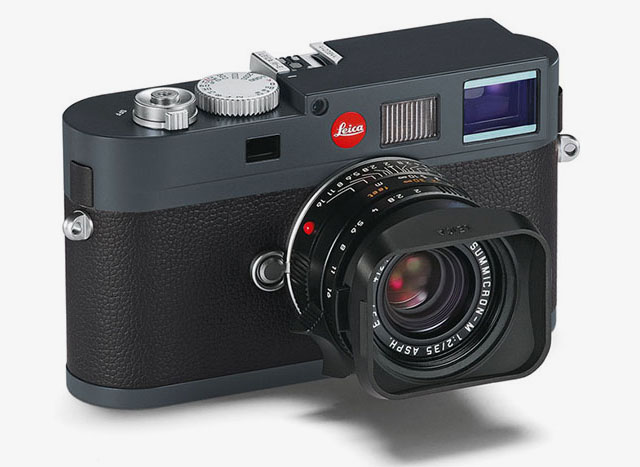
Hamburg. Leica M9 with Leica 50mm Noctilux-M f/1.0 at 160 ISO.
 

A bridge to the traditional camera market

Not all owners of cameras are aspiring to become a Henri Cartier Bresson or Pablo Picasso. It is said that if Leica hadn't had the sale of small cameras and the sale of Leica designed and branded optics to Panasonic, Leica wouldn't be. At all.

In the 1970ies Leica also produced the Leica CL with Minolta, a very compact and very economical camera that cane with a 40mm Leica C lens that had an M bayonet. In other words, an economical camera system that could mix with the M system in that one could start buying and using M lenses on the Leica CL before upgrading to a Leica M. The reason this is remembered as a painful period for some was not that the idea was bad, but that it was done in a way so Leica Camera took on the responsibility of shipping a lot of Minolta employees to Solms and teach them how to make cameras and lenses the Leica way. This was the main reason it is not remembered as a glorious period where Leica stuffed their bank account with increasing sale but a period where there was disruption and many expenses.


Leica M9 with 35mm Summilux-M ASPH f/1.4. Photo: Thorsten Overgaard, March 2012.

The Leica X1 came out of nowhere, totally unexpected by everybody at the same day as the Leica M9 was released. That they took on the form factor of the Ur-Leica was in my opinion a deroute from the ideal.

Those days are over and it's not a collector's item, it's a camera. So perhaps they would rethink the whole Leica X1 and perhaps mix it with the CL idea of using M lenses? 

The Fuji X100 that was announced a year after the X1 and delivered much later was inspired greatly by the Leica X1. However, Fuji didn't manage to keep it as simple as Leica but did add some new things that Leica without doubt have noted could be useful if redone in a proper Leica manner. 

A Leica X2 as an upgrade of the Leica X1 is workable because many who buy a Leica D-Lux 1 follow every model to the current Leica D-Lux 5, and so could on expect many of the Leica X1 owners to upgrade to a Leica X2. And every single small Leica does in fact lead their owners onto the Leica M, which is the core system of Leica Camera.


Two ladies in Salzburg sharing images. Leica M9 with Leica 35mm Summilux-M ASHP f/1.4. Photo: Thorsten Overgaard, March 2012


CMOS or CCD sensors..?

What if ... it's none of those. What if Leica invented something new? In any case, Leica have used Kodak CCD sensors and also CMOS (for Leica X1 and Leica X2), and what they always do is put image quality and natural, truthful colors and tones in the forefront. So don't expect them to cut corners on the choice of sensors to provide live view (which has nothing to do with photography [light] but is just a usability feature) or to beat Nikon on their 250,000 ISO.


Leica M9 with Leica 35mm Summilux-M ASPH f/1.4. Photo: Thorsten Overgaard, Nepal, March 2012.


What about the M10 then ..?

"The Leica M9 is quite perfect, so why bother?" you might say. At least that is what I am thinking. I am not in need of a Leica M10 anytime soon.

But then imagine the scenario that a fellow is in a camera store, and here he is looking at the two month old Nikon D800E and the one month old Canon 5D III ... and then the pretty and perfect Leica M9 that is almost three years old. Imagine the dilemma. He need a brand new M-something to justify buying the Leica.

Or imagine you wanted to buy a Leica M9 because ... well, just because it is such a nice camera. But it's given that the Leica M10 is coming some day, you think, and will it be sooner or later. In any case it will affect what you get for your money because you may not want to buy an M10 next month - and how will it affect your investment if a new Leica M10 comes out in the next months or within the next year?

For the reason of life continuity and the ability to continue to spit out Leica M cameras and M lenses, the M10 has to come out in a not so distant future. It would be stupid of Leica if they didn't have a plan to meet the rumors in the market about a Leica M10 (which automatically slows down the sale of Leica M9). Photokina 2012 in September would be a good occasion, because it's not coming on May 10 2012!

Monday 10th of September a week before Photokina could be a good date, else we are talking Marc 10 or May 10, 2013. But most likely we will get the Leica M10 on the special event on September 17, the evening before Photokina opens officially. Delivery times ... hopefully some drops right after the release, but likely there will be some months between Photokina and then actual delivery ... and then again a waiting list of months. When the first Leica M Monochrom production models were delivered from Meister Camera on August 18, they also stated on their website that there was a 6 month delivery time for new orders.

When the Leica M9 was released in 2009 a few hundred cameras were available immediately, and then after that the wailing list was months for the next two years or so.

So shoud the M10 be available in unlimited numbers ... then that would be a larger surprise than that the Leica M10 is coming!


Queen Margrethe II of Denmark. Leica M9 with Leica 35mm Summilux-M ASPH f/1.4. Photo: Thorsten Overgaard, April 2012.


Maybe ...

Leica seem to know how their market works very well. First you buy M8, then you buy M8.2, then comes Leica M9 and you buy that one. Then cones Leica M9 Titanium that generates a lot of PR and sells 500 cameras (not to mention the 20-30 prototypes that has a very special value for later and may finance the whole R&D in fact), then comes the Leica M9-P and again many must admit they like that one so much better that they have to help the second-hand market grow by donating their Leica M9 to new users via eBay and get the Leica M9-P - which by the way also is the first one in Silver why you may as well get two of them. And in between comes a few special editions.


Leica M9 with Leica 90mm Summarit-M f/2.5. Photo: Thorsten Overgaard, Nepal, March 2012.


Not to mention, many Leica M owners also buy an X1 or X2 for the spouse (just to have an excuse to get it), and for the car they need the Leica D-Lux 3, then the D-Lux 4, then the D-Lux 5, and perhaps the wife needs the D-Lux 5 in titanium.


Leica M9 with 90mm Summarit-M f/2.5. Photo: Thorsten Overgaard, Cape Town, January 2012.


To be continued ...


– Thorsten Overgaard, April 2012. Updated August 2012 and September 17, 2012


Index of pages covering Leica M9, Leica M9-P, Leica M-E, Leica M Monochrom and Leica M Type 240:

Leica M9 1 2 3 4 5 6 7 8 9 10 11 12 13 14 15 16 17 18   M9-P    
Leica Monochrom 20 21 22                                      
Leica M 240: 30         35                           What if? Links  


Above: American singer and model Joy Villa in Washington DC, wearing a wedding dress designed by Elisabeth Donaldson.
Leica M9 with Leica 50mm Noctilux-M f/1.0. © 2012 Thorsten Overgaard.


Leica M Type 240 Firmware update

Camera Raw 7.4 Beta
(with Leica M support)

Feel free to join the
Leica M Type 240 User Group
on Facebook

Latest Leica M9 firmware


Also visit:

NEW: Advanced Photo Workshop
Leica Definitions
Leica History
"Photographer For Sale"
Leica Lens Compendium
Leica Camera Compendium
NEW: Leica 50mm Noctilux-M ASPH f/0.95
Leica 35-70mm Vario-Elmarit-R ASPH f/2.8
Leica Digilux 2
Leica X1

NEW: Leica 35mm Summilux-M ASPH f/1.4
Leica S2 medium format dSLR
Learn from Thorsten Overgaard

Thorsten Overgaard
Thorsten Overgaard is a Danish feature writer and photographer who contributes stories and unique branding to magazines, newspapers and companies through exclusive and positive articles and photos. His work is being printed in Danish and international magazines, some of which are available via WireImage, Getty Images, Redferns and Associated Press. Some photos are available as limited signed editions online and from galleries. For specific image needs, contact Thorsten Overgaard via e-mail.

Feel free to e-mail to thorsten@overgaard.dk for
advice, ideas or improvements.

The Rangefinder Moment Podcast
Is a new free podcast about rangefinder photography from Victor Cajiao. Click on the image to subscribe and listen for free from iTunes. The first eposide is a talk with Thorsten Overgaard about the Leica M9 and more. The second episode is about choosing lenses for the Leica M9 and what might come May 10 ...

The Rangefinder Moment Podcast


Photo seminars Berlin Copenhagen and Hong Kong

Photo seminars Berlin Copenhagen and Hong Kong


  · © copyright 1996-2013 · Thorsten Overgaard · Villa Nøjsomheden · Silkeborgvej 601 · DK-8220 Brabrand · Denmark · Tel (+45) 4011 2996


© 1996-2013 Thorsten Overgaard