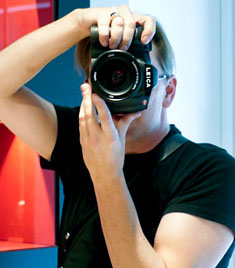
The Leica S medium format dSLR
- The Steinway of cameras?
By: Thorsten Overgaard, January 2010.
Most recent update March 14, 2018.
Add to Flipboard Magazine.
I have never used the Leica S system seriously for more than just a few hours at the time. The main attraction of the Leica S is the extremely high dynamic range it performs (15.3 stops).
For updated tips and tricks on the Leica S system, I recommend visiting the GetDPI Photography Forums where there are a lot of medium format and large format users. Also Red Dot Forum maintained by Leica Store Miami is a great resource for Leica S information beacuse the owner, David Farkas, has used the Leica S since it's relase.
Also, here is an Interview in Forbes with Stephan Schulz, Head of Professional Photo at Leica Camera AG, from May 2013: "How Leica Camera Is Reinventing The Medium-Format Market On Its Own Terms"
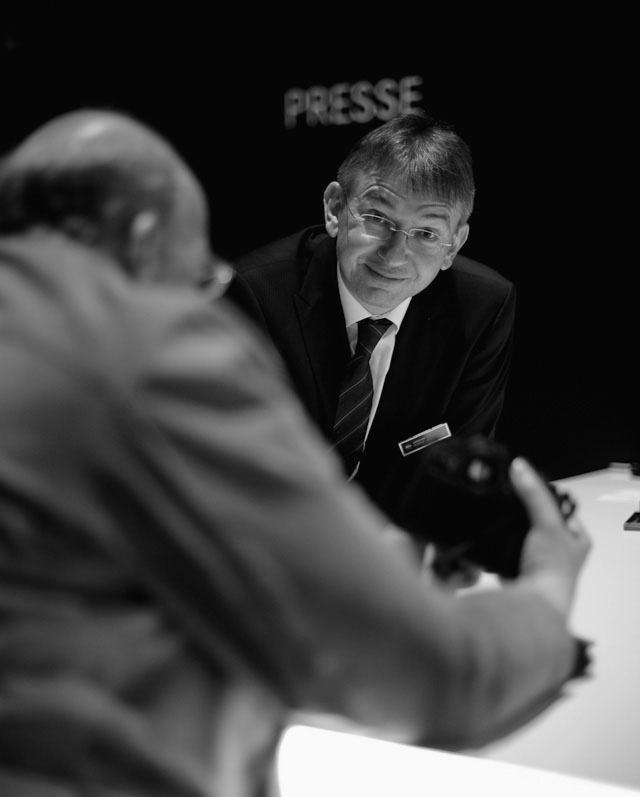
Leica S demonstration at the Photokina 2012 by Stephan Schulz who has been the midwife of the Leica S system since the S2 prototype. © 2012-2016 Thorsten Overgaard.
A history of the Leica S
Leica S and Leica S2 is the medium format Leica Camera AG introduced in December 2009 with the Leica S, and with Leica S2 in December 2009. The name is a bit curious because Leica produced an entirely different "large format" camera ten years earlier, the Leica S from 1996-1999 ( see further below).
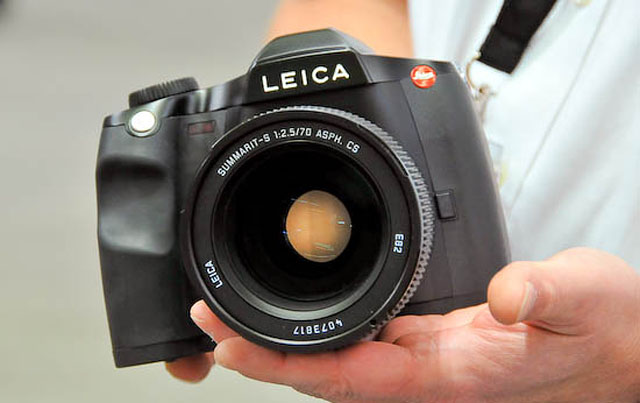
Leica S2 working prototype of a 37.5 MP medium format digital camera as presented at Photokina 2008 with the 70mm Summarit-S ASPH CS autofocus lens. (Photo from Digital Photography)
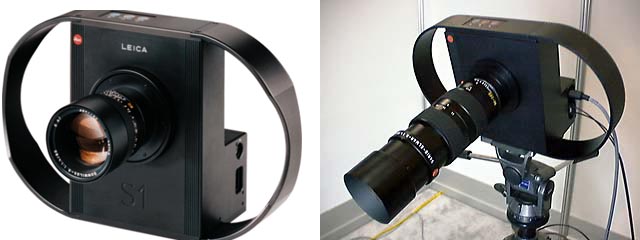
Early S: In 1996, as the digital photography revolution began, Leica introduced its Leica S1 digital camera to the market. The biggest of the three versions (Pro, Alpha and Highspeed) packed a 36x36mm sensor as 75 megapixels – quite something cosidering the digital SLR cameras had from 1 to 4 MP back then. The Leica S1 was meant as a studio camera that delivered a digital scan (30-60 seconds) directly to an Apple computer (using Silverfast software), and thus not a camera made for carrying around. The price was about $30,000 and 146 was made of them. The Leica S1 took Leica R and M lenses, as well as Hasselblad, Nikon, Canon, Minolta, Zeiss, Olympus, Pentax, Sinar and Mamiya.
The 75MP files is not entirely consistent witht he specifications I have for resolution, but as they were scan cameras (slowly taking one of the three main colors (RGB) at the time, it's possiblethe the megapixels added up to three times the pixel count:
Leica S1 Pro 5140 x 5140 pixels 185 seconds scanning time.
Leica S1 Alpha 2750 x 2750 pixels 75 seconds scanning time.
Leica S1 High Speed 4000 x 4000 pixels 18 seconds scanning time.
Comparison of the Leica S models
| Model |
S1
scan camera
|
S2
|
S2-P
|
S
006 |
S-E
006
|
S
007 |
|
M-P
Type 240 |
MM
Type
246 |
| Nickname |
Pro (75)
Alpha Highspeed |
|
|
|
|
|
|
"M10" |
"Elliott" |
| Start |
1996 |
09/2009
(introduced
09/2008) |
09/2009 |
09/2012 |
09/2014 |
08/2015 |
|
11/2014 |
05/2015 |
| End |
1998 |
2013 |
2013 |
2015 |
2015 |
- |
|
- |
- |
| MP |
Pro: 75 |
37 |
37 |
37 |
37 |
37 |
|
24 |
24* |
| Sensor |
|
CCD
7500x 5000 |
CCD
7500x 5000 |
CCD
7500x 5000 |
CCD
7500x 5000 |
CMOS
7500x 5000 |
|
CMOS |
CMOS
B&W |
| Sensor bit |
|
16 bit |
16 bit |
16 bit |
16 bit |
16 bit |
|
14 bit |
12 bit |
| Format |
36x36 |
30x45 |
30x45 |
30x45 |
30x45 |
30x45 |
|
24x36 |
24x36 |
| AA filter |
No |
No |
No |
No |
No |
No |
|
No |
No |
| Video |
|
|
|
|
|
Yes |
|
Yes |
Yes |
| Adapters |
Leica R
Leica M
Hasselblad Nikon
Canon
Minolta
Zeiss
Olympus
Pentax
Sinar
Mamiya |
Leica R
Hasselblad V
Pentax
P67
Mamiya M645 |
Leica R
Hasselblad V
Pentax
P67
Mamiya M645 |
Leica R
Hasselblad V
Pentax
P67
Mamiya M645 |
Leica R
Hasselblad V
Pentax
P67
Mamiya M645 |
Leica R
Hasselblad V
Pentax
P67
Mamiya M645 |
|
Leica R
E39
Nikkor
Canon |
Leica R
E39
Nikkor
Canon |
| Shutterless |
Yes |
No |
No |
No |
No |
No |
|
No |
No |
| Mirrorless |
Yes |
No |
No |
No |
No |
No |
|
Yes |
Yes |
| Live View |
No |
No |
No |
No |
No |
|
|
Yes |
Yes |
EVF electronic
viewfinder |
|
No |
No |
No |
No |
|
|
Extra |
Extra |
| Framelines |
|
|
|
|
|
|
|
LED |
LED |
| DNG |
|
DNG |
DNG |
DNG |
DNG |
DNG |
|
DNG |
DNG |
| JPG |
|
JPG |
JPG |
JPG |
JPG |
JPG |
|
JPG |
JPG |
| Base ISO |
|
100 |
100 |
100 |
100 |
100 |
|
200 |
320 |
| Actual Max ISO |
|
|
|
|
|
|
|
3200 |
12,500 |
| Max ISO (PUSH) |
|
|
|
|
6400 |
6400 |
|
6400 |
25,000 |
| Processor |
|
Maestro |
Maestro |
Maestro |
Maestro |
Maestro II |
|
Maestro |
Maestro |
| Buffer |
No |
No |
No |
2GB |
2GB |
|
|
2GB |
2GB |
| Frame selector |
|
|
|
|
|
|
|
Yes |
Yes |
| Memory card |
No |
SD
and
Compact Flash |
SD
and
Compact Flash |
SD
and
Compact Flash |
SD
and
Compact Flash |
SD
and
Compact Flash |
|
SD |
SD |
| GPS |
|
|
|
Yes |
|
Yes |
|
Extra |
Extra |
| WiFi |
|
|
|
|
|
Yes |
|
No |
No |
| Battery time |
|
|
|
|
|
2300 mAh |
|
800-2000 images
400-800 in Live View |
800-2000 images
400-800 in Live View |
| Screen |
None |
Sapphire |
Sapphire |
Sapphire |
Sapphire |
Sapphire |
|
Sapphire |
Sapphire |
| Weather sealed |
|
|
|
Yes |
Yes |
Yes |
|
Yes |
Yes |
| Weight |
|
|
|
|
|
1260g |
|
680g |
680g |
| Digital color filters for B&W JPG |
|
|
|
|
|
|
|
Built-in |
|
| Color temperature |
|
|
|
|
|
|
|
2000
- 13100 |
5400K |
| Price $US |
30,000 |
|
|
22,000 |
17,000 |
25,400 |
|
7,250 |
7,450 |
| Final specials $US |
|
|
|
8,995
(07/2015) |
5,995
(07/2015)
|
|
|
|
|
Should I get the Leica S ?
One of the less obvious advantages with the Leica S is the simplicity and the lack of buttons, dials and programs. It's a photographic instrument in its very basic form, for those who know how to take pictures. A camera is a means to an end. It is a tool conceived and constructed to do certain things and achieve certain goals, mainly recording of light; ideally with an exactness in timing and definition of light rays, reflections, colors - and without adding to or removing from what is. That is what a camera is and it's role.
I have tried the Leica S on a few occasions and I like the simplicity. I find it boring, and I mean that as a compliment: The thing is that I used to use Leica R for portraits and commercial work, and then I got the Leica M9 as a 'fun camera'. What I learned in a few months was that clients, subjects and my self would often pick the Leica M9 images instead of the Leica R images. to make a long story short, that lead to that I started using the very compact Leica M9 instead of the Leica R. I could travel with a small gear instead of a big trolley with Leica R equipment.
I never use my Leica R anymore. But if I did, I would upgrade to the Leica S.
When I say the Leica S is boring, this is what I mean: It is very simple to use, and when the light conditions are right, it takes perfect sharp pictures with accurate colors, so when you import the images into Lightroom you wonder what you should do with them. You're done.
The limits of the Leica S is the ISO that shouldn't go higher than ISO 640, and the shutter speed shouldn't go below 1/250 (as the mirror will cause shake that will be visible in the very detailed Leica S files). Most Leica S lenses are f/2.5, so that gives you an idea of the working limits.
If you have a studio setting, or an outdoor setting with lots of available light, and have made the effort that every detail in the photo is ready to be captured in scruitinizing detail (including makeup on faces), you can get the job done very fast. No need for fixing the files in the computer. You're done!
For the professional that work with medium format today that should mean something, because it will save a lot of time in post. Only the Phase One has similar advantages in color accuracy, and the photographers I know who have to do medium format praise the Leica S and the Phase One for "not having to spend hours adjusting the colors of a large group photo to be correct".
The Leics S is the perfect tool for thise who know their basics in photography (who can get white balance and exposure correct in camera). No more work to do, you're done and can move on to the next assignment.
Those who require the Leica S for assignments usually have so much light and so much requirement for sharpness that the lenses could start at f/8.0. For most things the Leica S is good at, professional users wouldn't use it wide open.
For the person who feel attracted to the Leica S as "the best ever dSLR" for indoor and outdoor will find that is is actually portable, and that they get lazy to compose; because the Leica S files allow you wo crop the image down to 25% or so without loosing any sharpness. So why get up the chair and walk closer to compose when you can shoot from where you are sitting and crop later? But you will find that when the conditions are not perfect in terms of light, composition and white balance, you just have some very large imperfect files that show your lack of perfection in detail.
So in short, the Leica S is a workhorse, and it is compact as such. Even sexy. But it is not a great toy because it just does the job. And when it doesn't do the job it's because you didn't know what you were doing, and you will just clutter your computer and workflow with some big files that doesn't show the sharpness and color accuracy of the Leica S.
If I didn't travel so much I might have one, just for those occasions where the conditions was for a Leica S. To get that almost religious experience of something that excellent (hmm ... now I talked my self into wanting one).
For current prices of the Leica S, Leica S lenses, Leica S Hasselblad adapters, etc, see prices here in US Dollars.
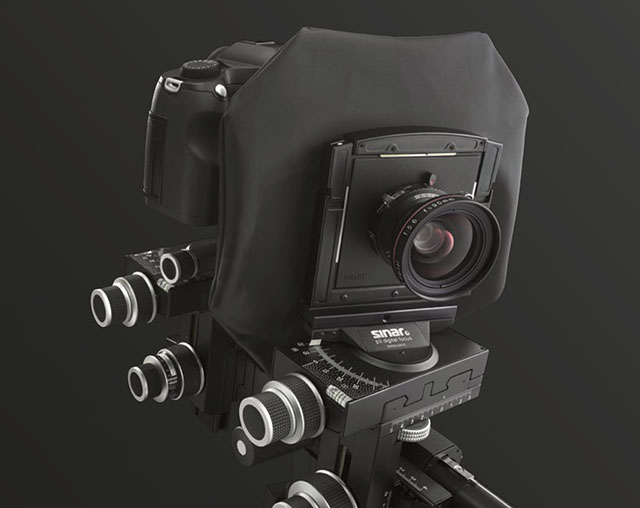
2013: Sinar p MF-L developed for photographers who wish to avail themselves of the Sinar view camera while using their Leica S medium format camera body.
The Leica S as panorama camera
In an interview in New York Times [LENS] in November 2013, Magnum photographer Josef Koudelka tells how he got a Leica S2 made into a panorama camera that basically replaced his Fuji panoramic 6x17 film camera.
Aparantly, what Leica did was put two lines on the viewfinder/screen and set the camera to black & white. "I made four trips with it together with the film camera. In the last two trips I realized I was taking more pictures with this Leica and I am enjoying it more," Josef tells.
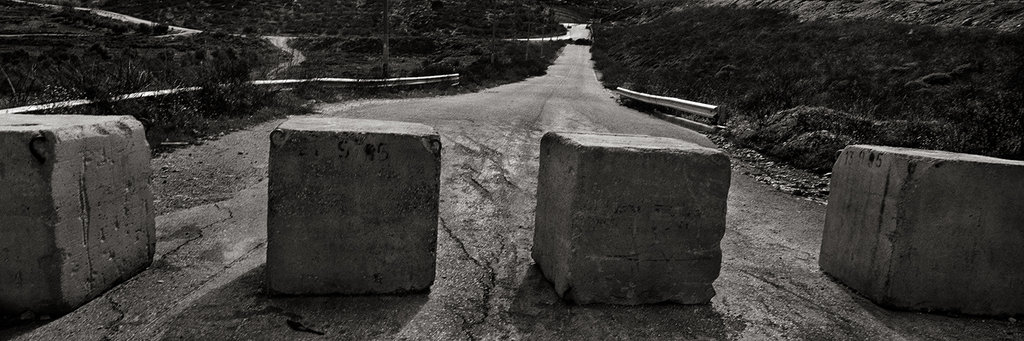
In an interview in New York Times [LENS] in November 2013, Magnum photographer Josef Koudelka tells how he got a Leica S2 made into a panorama camera
Also, here is an article from Rob Dose about usign the Leica S as panorama camera with the Leica TS-APO-Elmar-S 120mm.
Considering that Leica CEO Alfred Schopf slipped a line in an interview in February 2015 that Leica is preparing two new cameras in the $17,000 - $25,000 price range (body only), it made me think.
Does the Leica S sell well ?
The fact of the matter is - according to the crediable rumors I have heard - the existence of Leica Camera AG was at stake with the Leica S. If the Leica S hadn't made it, Leica Camera AG wouldn't have survived. But as it is evident in the expansion of Leica Camera AG, as well as in the financial reports, they are doing well. Leica S has sold really well, mainly in the first years to amateurs who wanted the "best dSLR money can buy" - for fun or for prestige. It may be true that the Leica S and the Leica M Noctilux (the worlds most expensive 50mm) has been popular gifts in China to people who would never use them, but it is also true that many ambitious people have bought the Leica S to utilize the photographic perfection.
In putting the Leica S to market, Leica Camera AG had to build a completely new, parallel orgaization of people from Phase One, Hasselblad, Mamiya, as well as professional photographers and others who have been on both sides of the table of professional studio photography. And the acquisition of the large format Sinar Photography is just one more step in that direction of becoming a household name in professional studio and fashion photography.
| |
 |
| |
Leica Camera AG acquired Sinar in 2013 |
| |
|
That many professional photographers have large systems of Phase One, Hasselblad, Mamiya or other expensive systems they are used to use just means that that world is not won in one year. Some professionals, Annie Leibovitz included, have gotten the Leica S2, but many more are to be won. The Leica S is not a fan and lifestyle choice as the Leica M and smaller Leica-branded cameras. The new adaptors that allow to use other brand lenses is a step forward, because what professionals upgrade most often is the body for more megapizels and more dynamic range, not the collection of lenses. Over the coming years Leica Camera AG may hope to get a bigger and bigger market share of the medium and large format market.
Taking the Leica S2 for a swing
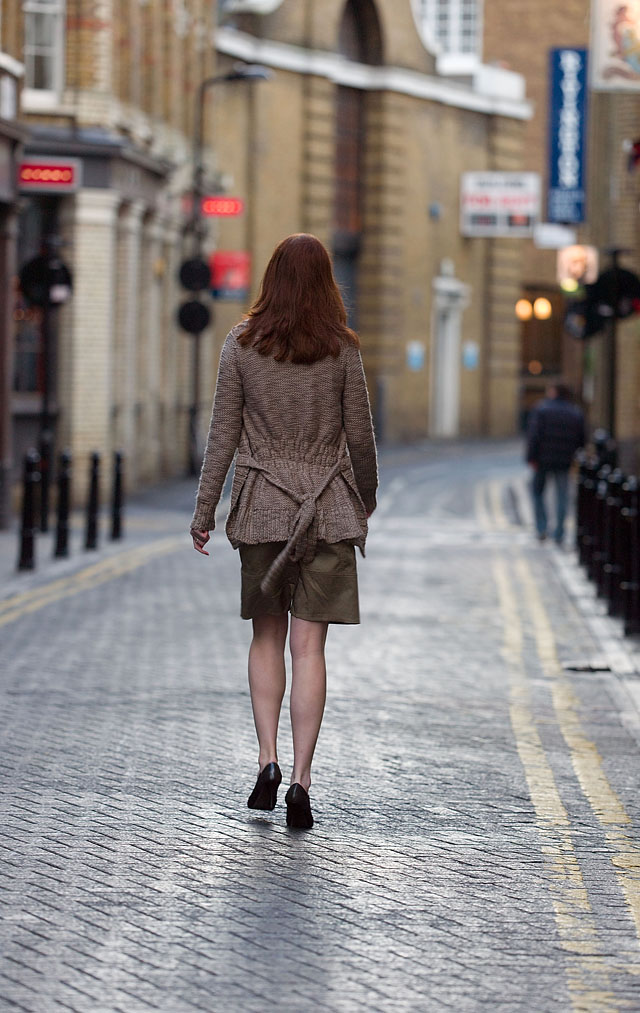
London, 2011: I did a series of photos in London with the Leica S2.
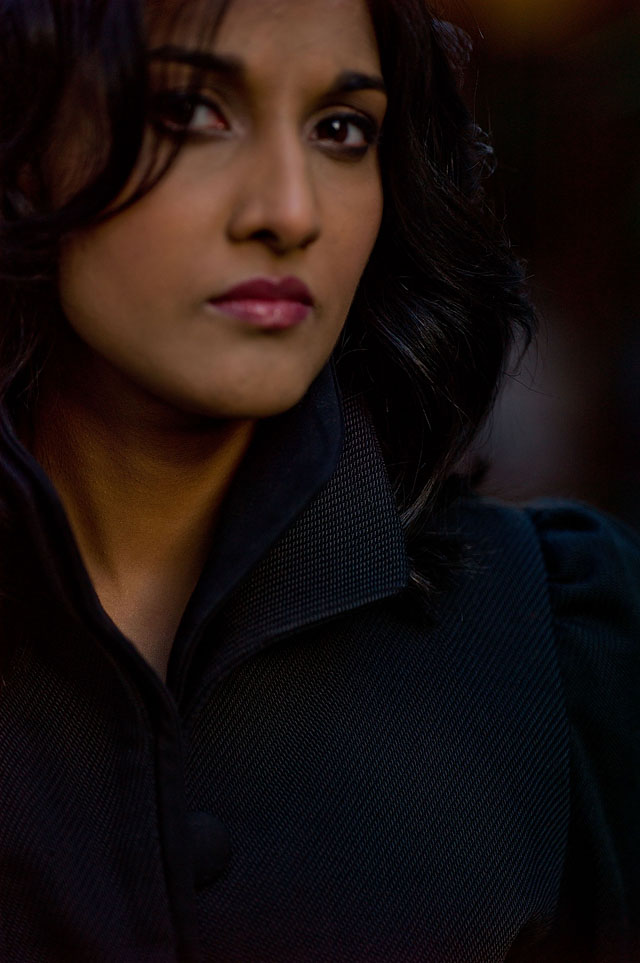
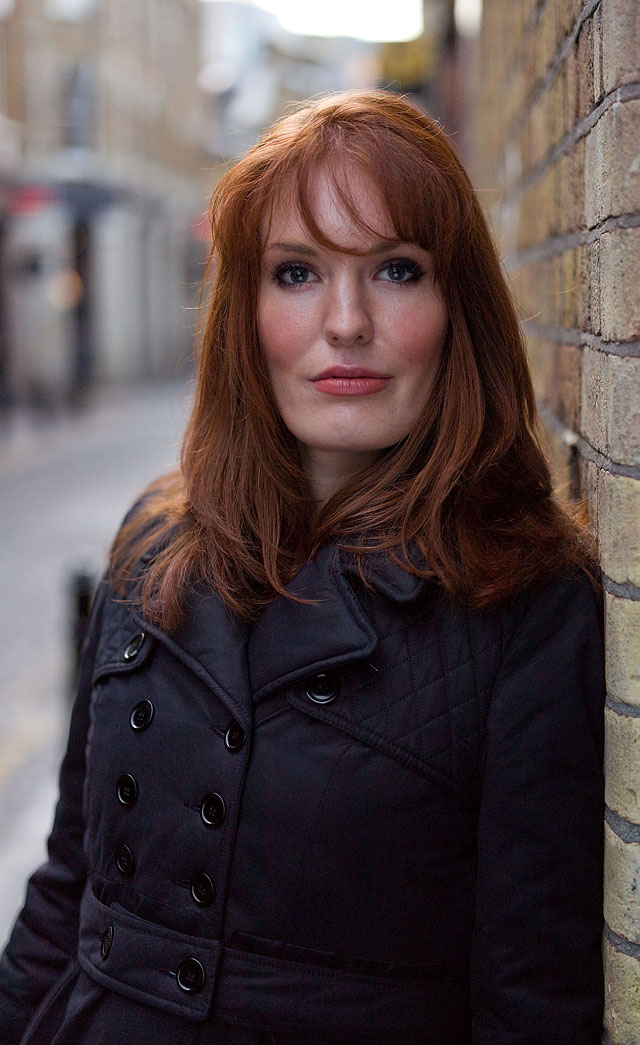
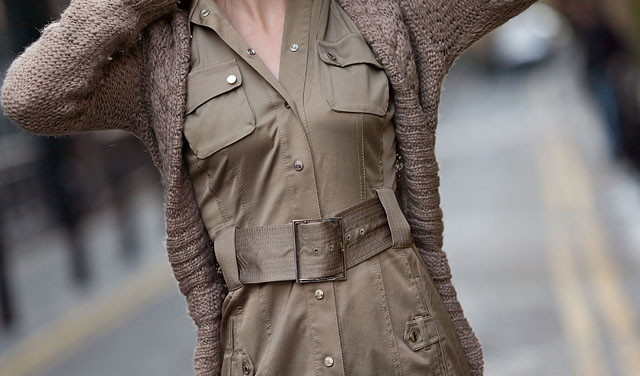
Leica S2 with Leica 120mm Summarit-S ASPH Macro f/2.5 at f/2.5, 320 ISO, manual WB. Unedited. While you can tell the details of the dress are nice, you can also see that the Leica S2 shouldn't be used wide open.
That level of "VCR-complicated menus" you won't find on the Leica S2 and that is worth a lot of money because it tells you a great deal about the whole philosophy behind the development of that camera. And if you agree with the power of simplicity, you've laid your eyes on the right precious little gem.
I'm mentioning this because too few realize just how important it is that the camera is not between you and the subject. Most people gear up when they want results, when in reality, they should gear down. A camera should work as a piece of paper for a writer or as a six-string acoustic guitar for a composer. It is there as a mean to express and record things, not as a source to the creation.
You are the source, the artist and the decision-maker in any art form.
Photography takes timing, knowledge about human relations, manners, composition, imagination, ideas, daring and a lot of other stuff to perform well.
| |
 |
| |
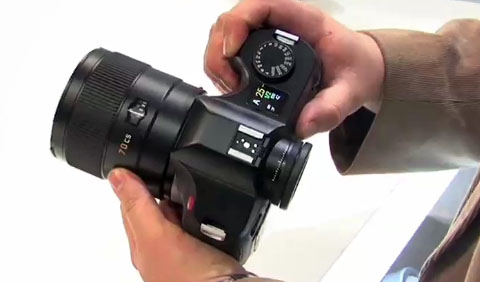
Leica S has the size of a Canon 5D |
| |
|
The technical side itself is rater simple and is like riding a bike or driving a car once you have learned it. It's control of light, focus and white balance. Those are the few technical mandatory aspects of photography and the ones the Leica S2 allow you to control. Easily.
After that the camera doesn't interfere with your vision and creation.
And that is rare qualities in these days where even cars will perform functions you don't want them to (with which remark I'm specifically referring to how cars will automatically turn on ECO drive whihc slow down operations, the window will automatically roll all the way down or up whenever you touch the button, etc.). What is a delight to use, is acoustic tools, which is tools you control, and which does not pretend to contain some form of intelligence that knows "what people want to do." At lest, if cars or cameras or other have "automatic" features, you as a user should be allowed to turn them off. The roles can easily be turned around so that you work for the tool and not the other way around.
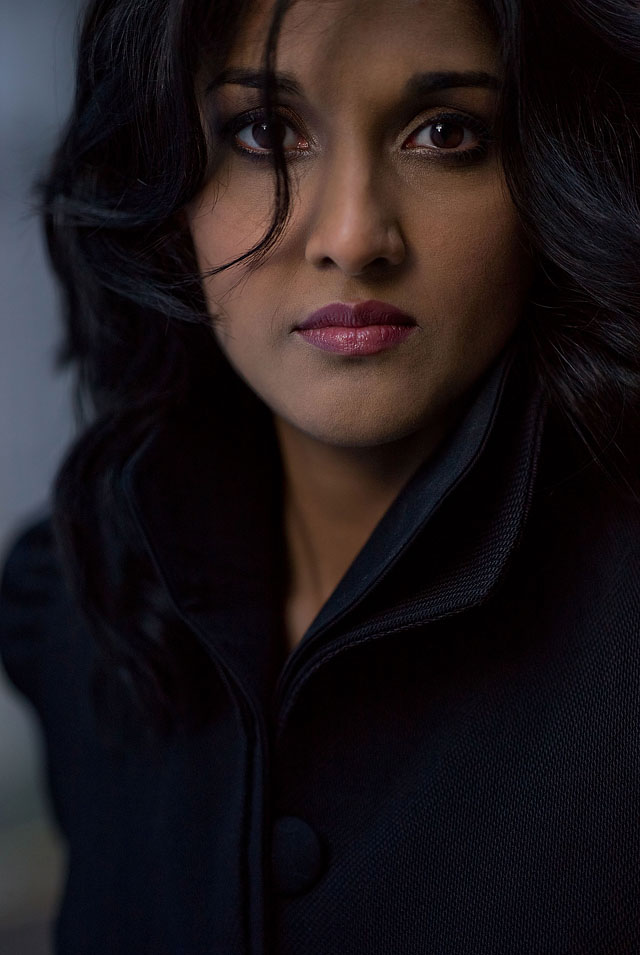
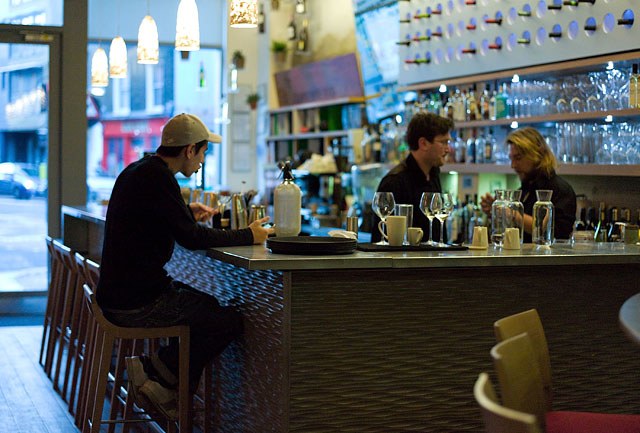
Leica S2 with Leica 120mm Summarit-S ASPH Macro f/2.5 at f/2.5, 320 ISO, manual WB.
Perfection
In short, the Leica S2 is for perfection. If you have the right light in say a beach shot in Barbados, or a well lit set in a studio, all you got to do is press the button and you got the final image. Very little - or nothing - has to be done to the image in Lightroom or Photoshop, it is actually perfect straight out of the box provided you set exposure, focus and white balance correct.
Focusing
The easiest way to get results is to set it to manual focus and use the focus-button on the back to get focus, check it and then eventual adjust manually if you want the focus to be elsewhere or better.
I wouldn't leave it to the camera to focus, I would want to be conscious about exactly where the focus is. One thing is that you operate with rather narrow depth of field (the 120mm Summarit-S ASPH Macro f/2.5 at f/2.5 has a more narrow focus than the Leica Noctilux-M f/0.95), the other is that you may not be able to tell exactly where the camera pointed the focus when it performed the auto focus.
It's all habit, but manual focus with help from the focus button on the back gives a lot of control and makes sense after few minutes of using the camera that way. In fact, a lot of the Leica S2 operations make sense after few minutes.
| |
|
|
|
|
| |
Buy the new eBook
"A Little Book on Photography"
by Thorsten von Overgaard |
|
| |
|
|
|
|
| |
Order now - Instant delivery.
More info
★
★
★
★
★
★ |
|
It's a humorous understatement to call this
new eBook by Thorsten Overgaard for
"A Little Book on Photography".
It's a grand book, a history lesson, life experience, a biography and poetry book and brilliant photo book!
All in one beautiful package of 180 pages
to fire you up and get you to love
photography ... unconditionally!
"A Little Book on Photography"
eBook for computer, Kindle and iPad.
New release March 2017.
Intro price only $47 - 180 pages.
| |
|
|
| |
Buy Now

Instant Delivery |
|
| |
|
|

|
|
| |
|
|
It's scary, isn't it?
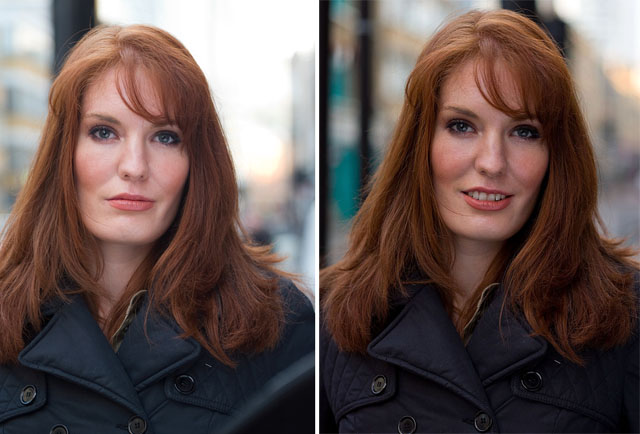
The amount of detail the Leica S2 present is scary for any model taking the position in front of the camera. Every little hair in the face, every little wrinkle, hair in the nose, ruthless details of the eyeliner and small red lines in the eyes. It is all there, loud and clear, not to mention actual defects as dry skin. Even a hair going astray across the face can cause a serious problem.
There is no other way than photoshop, and after having done a fair share of that you will learn to choose models with greater care. But also, you will pay attention to micro details when arranging your light and/or reflectors, because with softer light you can avoid some of the things that look odd when that detailed, which would look okay with other cameras.
In architecture you will want to make sure all small details are in order before you press the button, and dressing models you will make sure that there are no wrinkles ruining the shot.
It's simply a new level of perfection required. That's all.
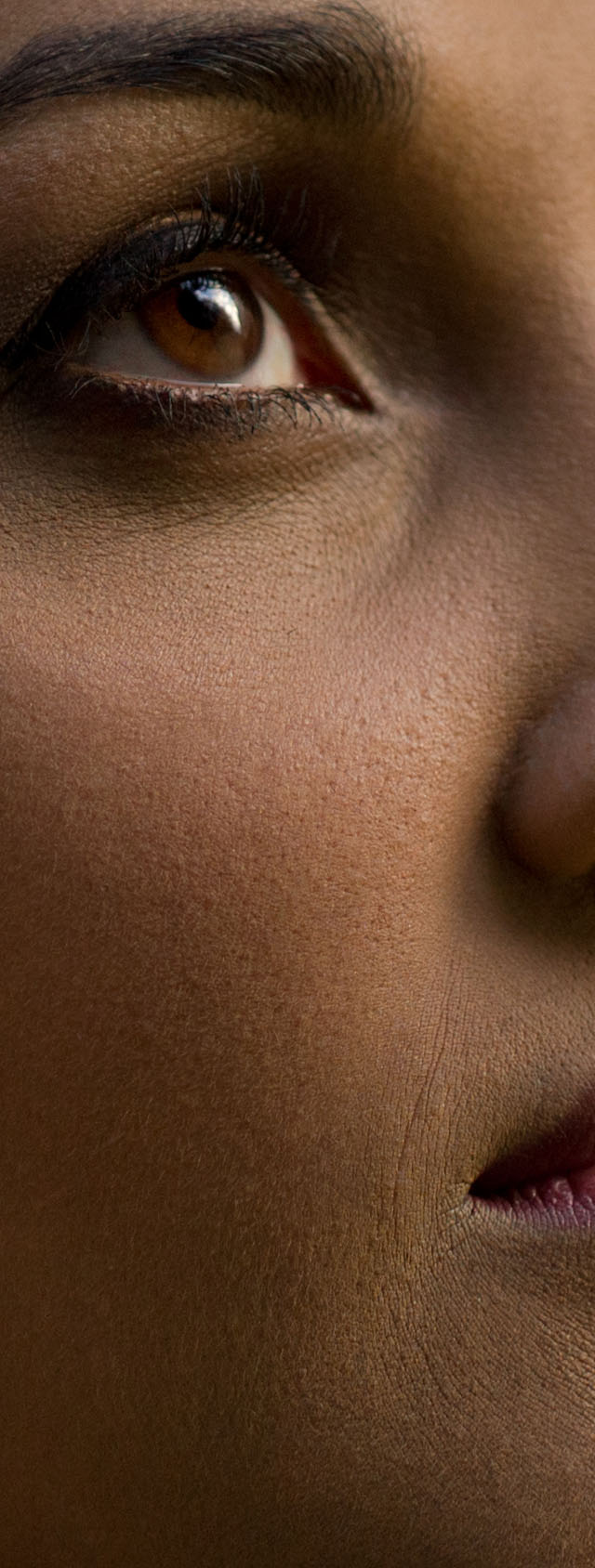
A 100% crop from the Leica S2 file seen on top of the page.
Applications
Being so far from the usual Leica M photography where you shoot lenses wide open and handheld, some times at very low shutter times, it can be hard to see what is the point of the Leica S2. It's not exactly a sexy camera, it's almost dull in that everything is predictable and reliable.
But some people and clients do require the resolution, perfection and prediction the Leica S2 offers. Just look around at all the online stores where you can zoom in on detailed views of their products. Leica S2 is an obvious choice for those, both for the level of detail, but even more so for the ability to create three-dimensional feel of products. While the camera itself is not very sexy, the liveliness of the images certainly are.
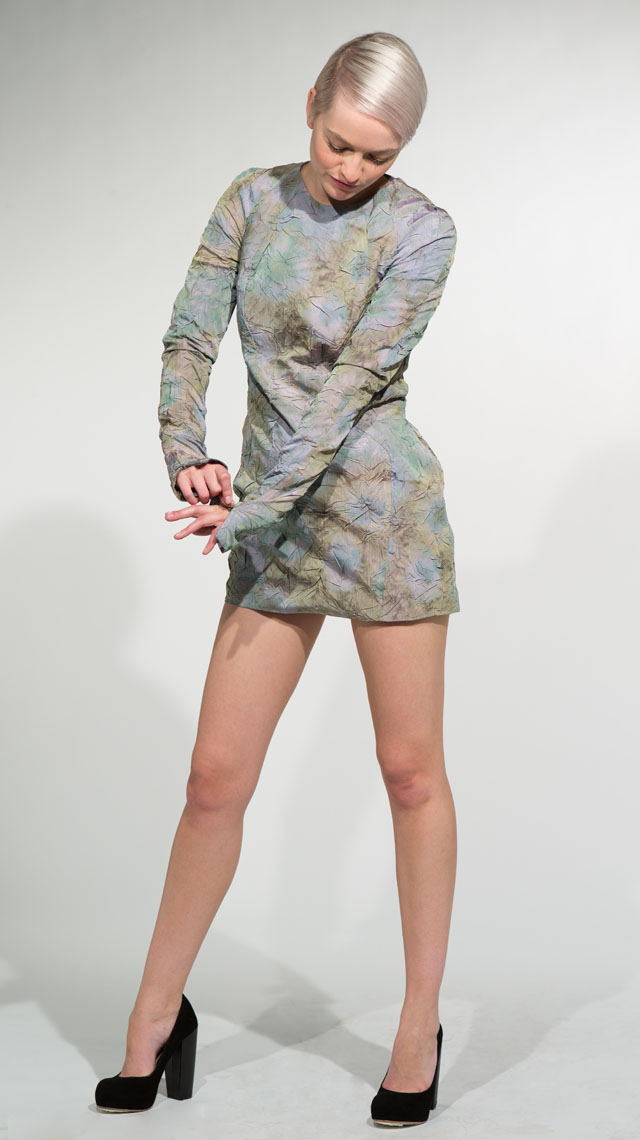
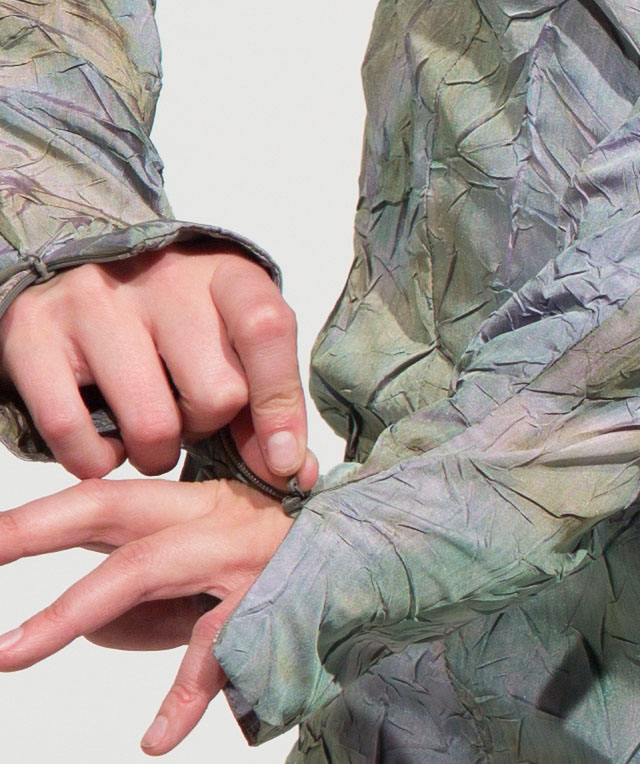
Online stores depend on sharp images so that the users can zoom in and "experience" details as in real life. This is a Leica S2 with 120mm Summarit-S f/2.5 at f/5.6 and 1/125 (mirror lock-up) 320 ISO in studio with daylight lamps. 100% crop below:
White balance
The only logical way of using White Balance on the Leica S2 is manual white balance setting. It's done with one press at the menu button, and then with the dial. The camera doesn't require focus on the WhiBal card (or white paper if you use that) to set the White Balance. A small detail, but important, as many cameras require the card to be in focus (unnecessary, but they won't do it unless).
Motion blurs and noise
The Leica S2 should be shot at 1/250 speed for it all to make sense. On a tripod and with mirror lockup you may go as low as 1/125 for people, for dead objects even lower with the mirror locked up (there is a menu in the camera for mirror lockup so that the mirror locks up when the shutter release is pressed once, next time the shutter release is pressed, you snap the actual image; and it would make sense to use either the S2 wired remote control, or the shutter release button displayed on Lightroom when using tethered shooting).
In 35mm film cameras it is common to have 1/250 as minimum speed for slides, because at lower shutter speeds, you would loose the micro details you else would be able to see when blowing the slide up on a wall. In the Leica S2 you will not only loose micro details, you will be able to see the vibration and motion blur ruthlessly clear in the file.
The reason being that the instant you release the shutter, the aperture in the lens is activated, the mirror goes up and down, and the shutter curtain moves. Not to mention that you are pressing the shutter release button in the same instant.; a lot of vibration and movement to freeze - which is done with the 1/250 shutter speed.

Having the choice between lowering the shutter speed or increasing the ISO, you would be better off increasing to 640 ISO. If you encounter noise (as in imprecise colors or film grain), you have a better chance of remedying this in Lightroom than vibrations and blur.
The sweet spot would be the camera's base ISO, which is 160 ISO, a shutter speed of 1/250 (or faster) and the aperture as high as possible, unless you want the depth of field from a fully open aperture.
The Leica S2 with lens is a large moving object to hold handheld. As an example, I can shoot the Leica M9 with a 50mm as low as 1/8, but when I pount a 90mm, I can't go below 1/60 without considerable risk of motion blur. The old rule of the focal length isn't bad (250mm = 1/250 second, 90mm = 1/90 second), except with the Leica S2 I would double it.
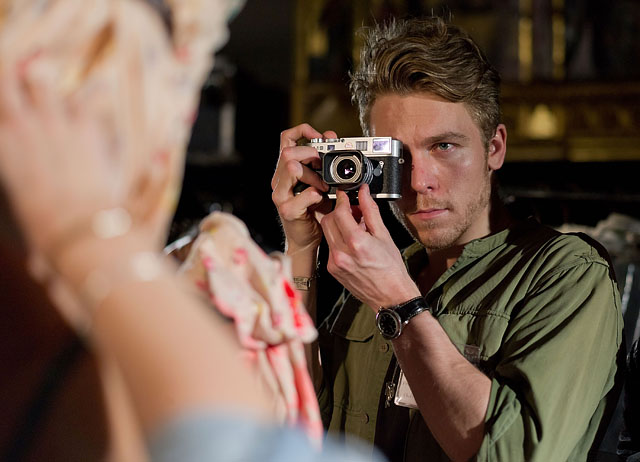
Tue shooting Kenzo 40th Anniversary show backstage with a chrome Leica M9 and 35mm Summicron-M ASPH f/2.0, shot with the Leica S2 and 70mm Summarit-S ASPH f/2.5 (ISO 640 with manual white balance)
Operations of the dials and menu
The menu system is probably the less Leica. I sense that there was an intended coorporation between Phase One and Leica in the beginning (leading to a Phase One-like menu system and an intention to have Leica lenses for Phase One), but the cooperation ceased before it took off.
At least this theory make it possible to blame the menus on somebody else than Leica (ha ha), because I feel that could improve in future developments of the S cameras. The small and very plastic wheel placed by the right thum is a pain in that you make sleections from the menu by rolling and clicking it. But it is also the same wheel you use for aperture, and by clicking it (by accident or deliberately) you choose between manual and aperture priority. And if there is one thing I don't want when I have chosen manual, is that the aperture changes or the camera switch to aperture priority. And both things will happen with the wheel at that position.
I don't expect the aperture to return to the lens itself in the form of an aperture ring (though I would love that), but a menu wheel by the screen might be a future development, leaving the small thumb-wheel to be only aperture (for example turn the wheel to change aperture, click it if you want to lock that aperture so as to be sure it doesn't accidental change when you touch the wheel).
It's a precision camera made for perfect images, so you want to make sure it stays with he decisions you made for it.
Having said (all) that, the operation of the menu system will do. You won't spend a lot of time changing settings, though the way you change WB and ISO on the M9 is a stellar example of how it could work on a future S system.
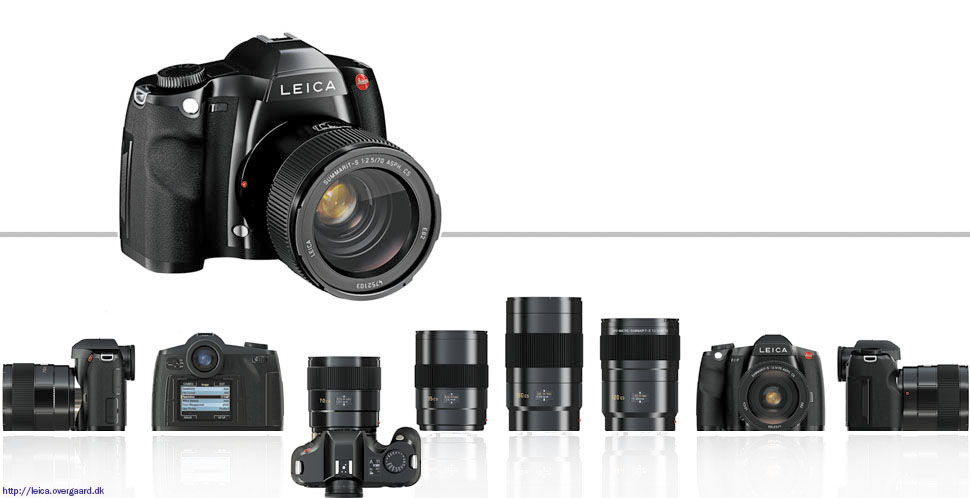
CS lenses available in 2012
On May 10 in Berlin Leica Camera AG released five new CS lenses, long awaited! Where the succes of the Leica S2 has sofar mainly been thanks to enthuiastic amateurs with a good bank account, professionals in general have been waiting for the CS lenses. And hey have been waiting a long time! But Leica Camera AG decided early in the process that the existing Central Shutter systems available weren't compact and precise enought for the Leica S system. So they developed their own, and this has now come to a point where they will deliver CS lenses. My guess is that we may also see an updated leica S2, the Leica S at Photokina in September 2012.
Markus Tedeskino on the Leica Central Shutter S-Lenses in St. Peter Ording, Germany from Leica Camera on Vimeo.
- Leica S studios for rent in London, Tokyo and Wetzlar
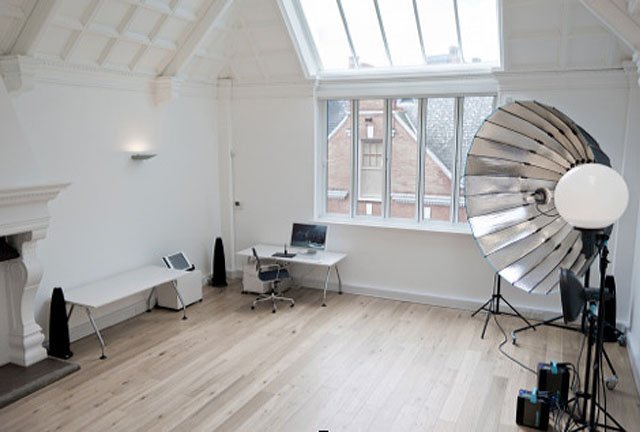
The ever-expanding "Leica Embassy of London", the Leica Store Mayfair rent out their Leica S2 daylight studio dedicated Leica S2 shootings (can be rented and is complete with make-up rooms, flash setup, S-experts and all by sending an e-mail to hire@leica-camera.co.uk ).
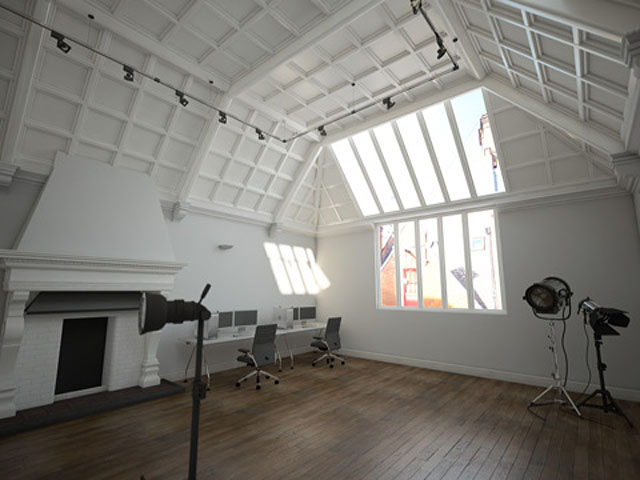
Leica Store Mayfair now includes a daylight studio exclusively for Leica S2 users
The same is the case at Leica Store Ginza in Tokyo where Leica opened a Leica S Studio in May 2012. Leica Professional Store Tokyo, 2F Tokai-do Ginza Bldg., 6-4-1 Ginza Chuo-ku, Tokyo, 03-6215-7074, Japa. e-mail: Pro-Store@leica-camera.co.jp
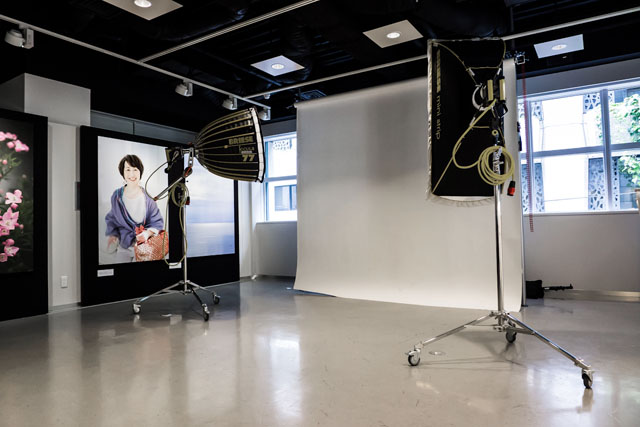
The S-Studio in the Professional Store Tokyo, Ginza. Photo: Eddie Eng/Hyperbeast
Not a low light camera
One of the big problems of the Leica S2 system is that it is addressed to a new crowd than the old Leica M shooters. And M cameras are perfect for low light and reportage. However, the S2 addresses a crowd who uses other medium format systems today, and who are used to require lots of light to perform a shooting – and they may even use a tripod most of the time! In that comparison Leica S2 has more lightstrong lenses, more compact camera body, better ergonomics, simplicity and great build quality – and amongst all not just razor sharp image quality (as Hasselblad) and outstanding image quality (as ... well, nobody in medium format).
The Steinway of cameras?
In my mind there is no doubt that at the current technology-level, this is it. It is not as perfected a camera in it's core idea and operations as the classic Leica M series which was devised 100 years ago, but it's a good start.
In terms of image quality and straight-forwardness of what is in an image (which translates into unaltered and therefore the truthful image), it's the right one.
And the reason I compare it to the Steinway and not the Stradivarius is that it requires a concert hall to perform in, if you want from it what it can perform. Like the Steinway it may look and sound good for playing in the street, but that was not what it was made for. It requires a setting.
And speaking of which; many musicians do well without a Steinway, and in the other end many people of wealth can afford a Steinway and do so. And why not?
I discussed the Steinway with a pianist I know and who want one for him self at home. It's a pricey tool, but why not. It's the one instrument that will do as you tell it to, clear and simple. No alteration, no adding to or removing from. Exactly what you want.
The Leica S2 will not catch fire for real till spring 2011 when the 120mm CS (central shutter) lens starts delivery. That is the one the main target group are in need of to make the Leica S2 make sense. What happens then nobody knows, contrary to most rumors, the Leica S2 is doing so well you have to join the waiting list to get the camera and lenses already now.
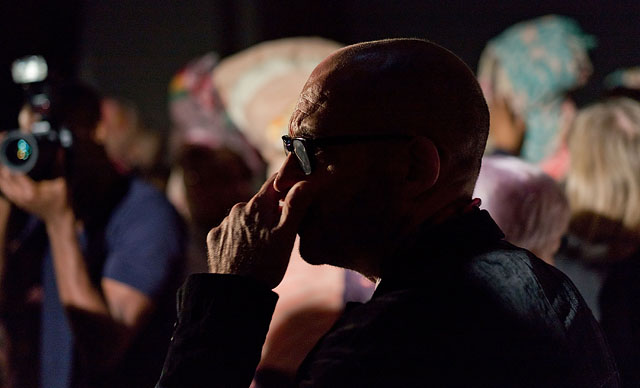
Kenzo designer Antonio Marras backstage before the 40th Anniversary Show, photographed with the Leica S2 and 70mm Summarit-S ASPH f/2.5 at 640 ISO.
Workflow
Using medium format for what you would use medium format for, post processing is a major part in a photographic assignment. Probably few will believe with how little or no work the S2 files fly through Lightroom. The colors and sharpness is as it should be, so what would you like to adjust then. That is really the question.
You will have to think about what you are doing, because almost no matter what computer you use, that being a laptop in the field or a Mac Pro in a studio, you are working with tremendous big file sizes. And those take time. On the positive side, you don't shoot that many frames with a MF as you do with a 35mm system. No need to, actually.
But editing S2 files is really an eye-opener. You are done much faster than you would expect, simply because that when the focus and light is right, everything is set to go. You may want to improve fill light or change exposure or white balance a bit, but that is basically it.
A 30" screen by the way is recommended for editing Leica S2 files, it speeds the work up a lot because you need to view some of them 100% size and want to be able to judge a larger area at one time, not having to move around the image.
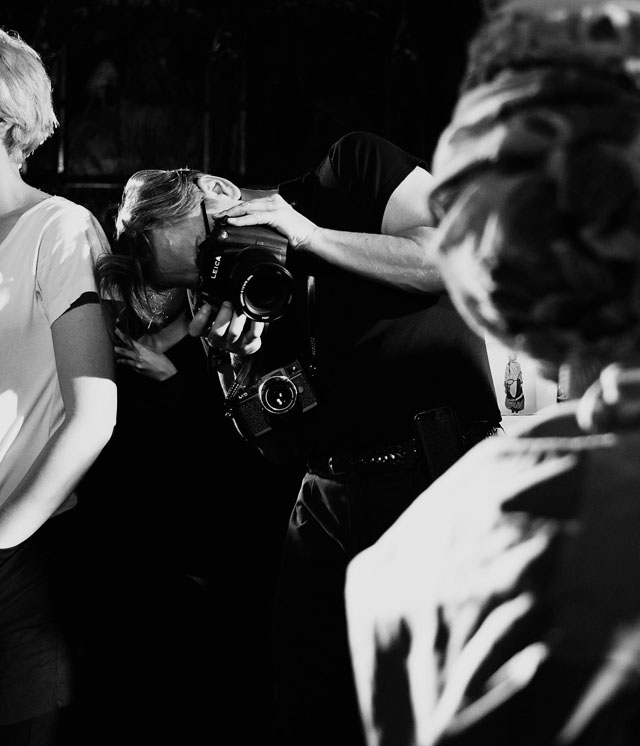
Me, working backstage at the London Kenzo 40th Anniversary show with the M9 and S2. Photo: Tue Juelsbo (with Leica M9 and 35mm Summicron-M ASPH f/2)
For current prices of the Leica S, Leica S lenses, Leica S Hasselblad adapters, etc, see prices here in US Dollars.
Black and White
I have no experience with the B&W on the S2, but from what I am told, it looks great at ISO 640 and higher, and has filmlike qualities. I will try to give it a swing in a week or so.
So perfection ... is it really necessary
How much of the Leica S2 perfection that comes from the sensor and how much comes from the lenses, I frankly don't know. But I know that when you look at a Leica M9 Noctilux-M F/0.95 photo on the screen, and a Leica S2 70mm, it looks so much the same you often have to check the files EXIF data.
But when you look at the Leica S2 with the 120mm lens, and you blow it up in 100%, the detail is breathtaking and scary at the same time. And I wonder, will one be able to achieve the same quality with a future M10 or M11 with a similar resolution sensor - hence then the need for the larger, heavier medium format cameras such as Leica S2 and Hasselblad will belong to the past? Time will tell, though the Leica S2 system has the fingerprint of medium format in its handling of DOF.
Shooting style and available light
The S2 is a sunshine or daylight camera. If no light is available, you need flash systems or film light to make it work.
The shooting style of the M9 is much different than that of the Leica S2. The S2 reminds me of my Leica R9/DMR which is also a camera that responds very well to perfection in light setting, light metering, white balance and focusing. If you are perfect on all these qualities, the end result is extraordinary and perfect. But both the R9 and S2 you use "with a certainty" whereas you fool around and take chances with the Leica M9. Simply because you are more mobile, and often helped by lightstrong lenses such as the Noctilux-M f/0.95 or the Summilux f/1.4 lenses, combined with a body that doesn't contain other moving parts than a rather small shutter.
Where the S2 requires 1/250 and a maximum of 640 ISO with an f/2.5 lens, the M9 requires 1/8 of a second and a f/0.95 lens. In other words, the working conditions of the M9 require 8,5 stop less light for it to work (which translates into about 180 times the amount of light; as each stop is a halving or doubling of light). Hence the possibility to fool around and take chances with the Leica M9, because the headroom is there. The Leica S2 must be put to rest at sunset; the M9 can continue to play all night.
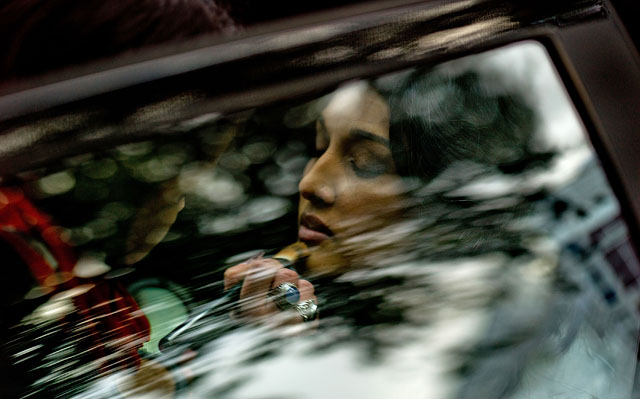
Natacha preparing the makeup on Ms Shaw. Photo by Tue Juelsbo with Leica S2 and 120mm Summarit-S f/2.5 through the glass of a car
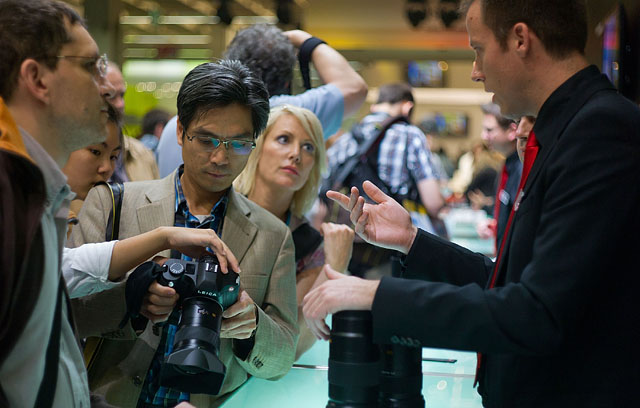
Photographers testing the Leica S2 with the new Leica 120mm Summarit-S CS f/2.5 prototype lens at Photokina 2010. The CS lenses are expected for delivery in spring 2011. Photo: Thorsten Overgaard.
As always, feel free to e-mail to thorsten@overgaard.dk for advice, ideas or improvements.
Advertisment:

For current prices of the Leica S, Leica S lenses, Leica S Hasselblad adapters, etc, see prices here in US Dollars.
For a comment on prices from Leica Camera's Vice President of Marketing Christian Erhardt, see this article.
Leica S can be found as rental in various places. Have a look at the German rental house Digital Rental Services, but also some Leica Stores will have rental equipment.
Leica S2-P: Professional edition with Sapphire Glass minotor screen and S-Body "Platinum Service" + more.
Leica S2:
Sensor: 37.5 megapixel Kodak KAF-37500 CDD using microlenses, 14-bit with a native 12 f-stop dynamic range. Using Leica's unique Maestro processor, made for the S2 and coming R10 cameras.
AF: Each lens will be tested in the factory and the actual AF-tolerance will be inserted into the lens so that no matter which camera the lens is attached to, the AF-mechanism will adjust to that lens. The accurate F-reading will be part of this as well (so that the reading is adjusted if the f/5.6 is f/5.5 or f/5.7).
There AF on/lock button by the thumb of the right hand was added in the production type but was not part of the prototype.
Weather sealing: The camera is weather sealed with 35+ weather seals. The lenses too.
FPS: 1.5
frames per second and a 1GB+ buffer. S2 support 600X UDMA 6 card (= continous shooting till the card is full; no buffer delays).
IR: Each lens will have built-in IR filter inside the lens (whereas other manufacturer has it as a glass in front of the sensor).
Two editions: S2-P with and S2 without safire glass on the screen, lenses with and without leaf shutter (CS).
Startup time: 0.3 second.
Weight: 1.3 kilo (excluding optional hand-/battery grip that can be mounted on the bottom of the camera). For comparison Hasselblad H3DII-39 weights 1.8 kilo, Nikon Dx3 weights 1.3 kilo, Mamya 645AFDIII with P45+ 1.8 kilo, Sinar Hy6 w/eMotion 75 1.9 kilo, Canon 1Ds Mark III 1.4 kilo.
Software: The S2 and S2-P ships with a full version of Adobe Lightroom and new tethered shooting software which will allow to shoot images right into Lightroom 3.2 and higher. Leica’s tethered shooting “plug in” functions with any software that has a “Hot Folder function” and processes DNGs.
DNG and JPG at the same time: Provides instant JPEG image output aside from DNG.
Pro Service: Leica "will offer a service and support concept that provides the greatest possible security and support for photographers working with the Leica S2. The concept includes integrated standard features such as a pool with replacement cameras and a leasing programme, as well as expert local contacts.
CS & FPS: First digital AF medium format camera that offers CS 1/500 sec & FPS 1/4000 sec.
Read this July 14, 2009 article about an Leica S2 demo at Fotocare on Manhatten, New York. |